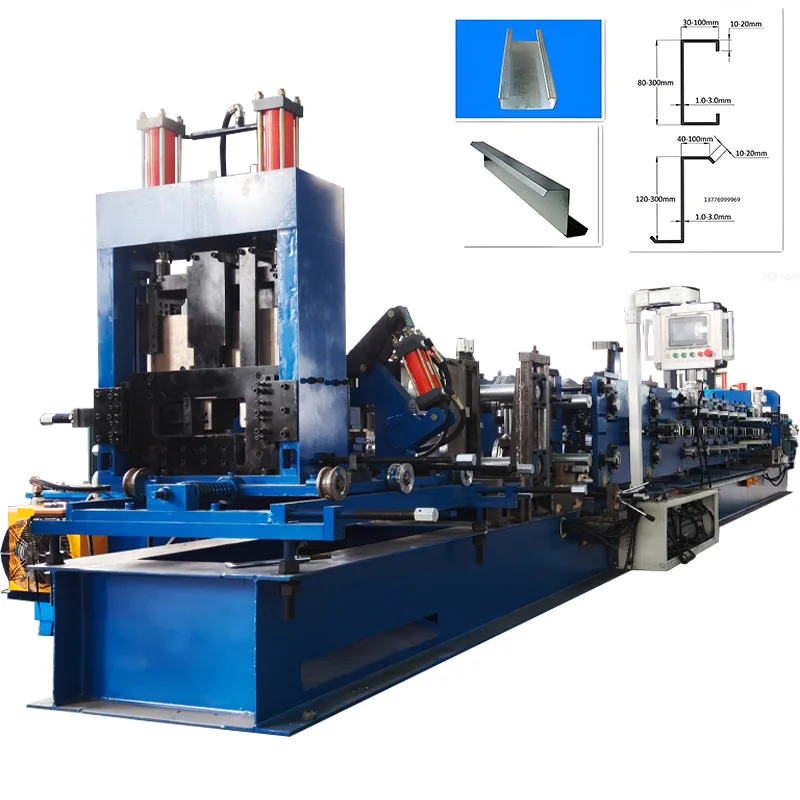
The modern agricultural and industrial landscape demands precision-engineered equipment to ensure efficiency and sustainability. A Feeding Trough Roll Forming Machine represents a critical advancement in the production of durable, standardized livestock feeding systems, utilizing cold-roll forming technology to transform metal coils into high-strength troughs. By automating the shaping process, manufacturers can achieve unparalleled consistency and structural integrity.
Across the globe, the shift toward automated livestock management has increased the demand for high-quality feeding infrastructure. Utilizing a Feeding Trough Roll Forming Machine allows for the rapid production of troughs that are not only cost-effective but also resistant to the harsh environments typically found in farming operations, such as corrosion from feed and weather exposure.
Understanding the technical nuances of these machines—from hydraulic shearing to PLC-controlled alignment—is essential for businesses looking to scale their production. This guide explores the global impact, core components, and future innovations of the Feeding Trough Roll Forming Machine, providing a comprehensive overview for industrial stakeholders.

Global Industry Context of Feeding Trough Roll Forming Machine
The global agricultural sector is currently undergoing a digital and mechanical transformation to meet the food security demands of a growing population. In this context, the Feeding Trough Roll Forming Machine has become indispensable for creating standardized, hygienic, and durable feeding systems. According to industry trends aligned with ISO standards for machinery, the move toward automation reduces material waste and ensures that livestock equipment meets strict safety and durability criteria.
Many manufacturers face the challenge of balancing high production speeds with the need for precise dimensions to ensure that troughs fit perfectly within existing barn structures. The integration of high-precision cold roll forming technology addresses these challenges by providing a seamless workflow from raw steel coil to a finished, multi-layered or single-profile trough, significantly lowering the cost per unit while increasing overall output.
Definition and Technical Meaning of Feeding Trough Roll Forming Machine
A Feeding Trough Roll Forming Machine is a specialized industrial system designed to bend long strips of metal—typically galvanized or pre-painted steel—into a specific U-shaped or custom trough profile through a series of consecutive rollers. Unlike traditional pressing, roll forming gradually shapes the material, which prevents deformation and maintains the structural integrity of the metal, making it ideal for long-span feeding systems.
From a technical perspective, this machinery integrates several critical stages: decoiling, leveling, forming, and cutting. The use of hardened rollers ensures that the machine can process various material thicknesses without wearing down, while the automated cutting system ensures that every trough produced is exactly to the specified length, reducing the need for manual post-processing.
In the broader industrial sense, these machines bridge the gap between raw metallurgy and agricultural utility. By enabling the mass production of standardized components, the Feeding Trough Roll Forming Machine supports the global effort to modernize farming, promoting better animal welfare through cleaner, more efficient feeding environments.
Core Components of Feeding Trough Roll Forming Machine
The operational success of a Feeding Trough Roll Forming Machine depends on the synergy of its primary components. The feeding system, often paired with a decoiler, ensures a constant and tension-free supply of material, which is crucial for preventing ripples or inconsistencies in the final profile of the feeding trough.
At the heart of the Feeding Trough Roll Forming Machine are the forming stations. These consist of high-precision hardened rollers arranged in a sequence; each station bends the metal slightly more than the previous one. This incremental approach ensures that the material does not crack and that the final trough possesses high structural rigidity and a smooth finish.
Finally, the hydraulic front shear and PLC control system provide the "intelligence" and "precision" of the Feeding Trough Roll Forming Machine. The PLC allows operators to input exact lengths and quantities, while the hydraulic shear executes a clean, deformation-free cut, ensuring that the edges of the feeding trough are safe and accurately sized for assembly.
Operational Efficiency of Feeding Trough Roll Forming Machine
Efficiency in the production of livestock equipment is measured by throughput and material utilization. The Feeding Trough Roll Forming Machine maximizes this by automating the transition from raw coil to finished product. By reducing human intervention in the forming and cutting phases, manufacturers can operate 24/7 with minimal downtime, significantly lowering labor costs.
Moreover, the precision of the hydraulic cutting system minimizes scrap metal, which is a vital factor in maintaining profitability and environmental sustainability. When compared to traditional fabrication methods, the roll forming process is vastly superior in terms of speed and consistency, allowing for the rapid deployment of feeding systems across large-scale agricultural projects.
Efficiency Analysis of Feeding Trough Roll Forming Machine Systems
Global Applications of Feeding Trough Roll Forming Machine
The application of the Feeding Trough Roll Forming Machine extends far beyond simple farm troughs. In regions like North America and Europe, where industrial livestock farming is highly standardized, these machines are used to create integrated feeding lines that connect directly to automated silos, ensuring a seamless flow of nutrients to animals.
In emerging markets across Asia and Africa, the affordability and durability of roll-formed troughs are driving a transition away from wooden or concrete feeders, which are prone to bacterial growth. By deploying Feeding Trough Roll Forming Machine technology, local manufacturers can provide farmers with hygienic, galvanized steel options that improve animal health and reduce feed waste.
Long-Term Value and Advantages of Feeding Trough Roll Forming Machine
The primary value of investing in a Feeding Trough Roll Forming Machine lies in its ability to deliver consistent quality over millions of cycles. The use of reinforced frames and hardened rollers means that the machine does not lose its calibration over time, ensuring that the 1,000th trough produced is identical to the first. This reliability is essential for companies that provide warranties on their agricultural products.
From a sustainability perspective, the precision of the roll forming process significantly reduces the carbon footprint associated with material waste. By optimizing the use of galvanized and pre-painted steel, the Feeding Trough Roll Forming Machine helps manufacturers adhere to greener production standards while maintaining a competitive edge in pricing.
Furthermore, the flexibility of these machines—allowing for adjustable forming stations—means that a single investment can serve multiple product lines. Whether producing lightweight troughs for poultry or heavy-duty reinforced troughs for cattle, the machine can be adapted to different thicknesses and widths, providing long-term scalability for the business.
Future Trends in Feeding Trough Roll Forming Machine Technology
Looking ahead, the Feeding Trough Roll Forming Machine is set to integrate more deeply with Industry 4.0 principles. We expect to see the adoption of IoT-enabled sensors that can monitor roller wear in real-time, predicting maintenance needs before a failure occurs. This shift toward predictive maintenance will virtually eliminate unplanned downtime in high-volume factories.
Additionally, the development of new, ultra-corrosion-resistant alloys will require the Feeding Trough Roll Forming Machine to employ more advanced roller coatings and adjustable pressure systems. These innovations will allow for the production of troughs that can withstand even the most aggressive chemical environments in industrial farming.
Automation will continue to evolve, with the integration of robotic stacking and packaging systems directly at the exit of the roll forming line. This will create a fully autonomous production cell where a raw coil enters one end and a packaged, ready-to-ship feeding trough emerges from the other, further reducing the cost of agricultural infrastructure worldwide.
Technical Performance Analysis of Feeding Trough Roll Forming Machine Variants
| Machine Variant | Production Speed | Material Versatility | Precision Score (1-10) |
|---|
| Basic Mechanical Model | Low (5m/min) | Galvanized Steel only | 6 |
| PLC-Controlled Standard | Medium (12m/min) | Steel & Aluminum | 8 |
| Hydraulic Front Shear Pro | High (20m/min) | Multi-alloy / Coated | 9 |
| Double Layer Precision | Medium (10m/min) | Heavy-duty Steel | 10 |
| Custom Profile Series | Variable (8-15m/min) | Custom Alloys | 8 |
| Industrial Automation Max | Ultra-High (30m/min) | All Coated Metals | 10 |
FAQS
The primary advantage is the gradual forming process. Unlike press brakes that bend metal in one sharp motion, the Feeding Trough Roll Forming Machine uses a series of rollers to shape the material incrementally. This eliminates stress fractures in the metal, ensures a perfectly consistent profile across the entire length of the trough, and allows for significantly faster production speeds with less manual labor.
Yes, modern Feeding Trough Roll Forming Machines are designed for material flexibility. By utilizing high-precision hardened rollers and adjustable forming stations, they can process galvanized steel, pre-painted color-coated steel, and aluminum alloys. This allows manufacturers to offer troughs with different corrosion resistance levels and aesthetic finishes depending on the client's needs.
The hydraulic front shear allows for precise, automated cutting at any specified length without stopping the entire line for manual measurement. Because it applies uniform pressure, it produces cleaner edges and prevents the deformation of the trough's profile. This reduces material waste and eliminates the need for secondary trimming or grinding, streamlining the entire workflow.
Regular lubrication of the transmission system and periodic inspection of the roller surfaces are essential. Since rollers are made from hardened steel, they are highly durable, but checking for debris buildup and ensuring correct alignment via the PLC system prevents premature wear. Following a preventive maintenance schedule ensures the machine maintains its precision for years of continuous operation.
While standard machines are set for specific profiles, many high-end Feeding Trough Roll Forming Machines feature adjustable forming stations. For completely different profiles, custom roller sets can be manufactured and swapped into the machine. This versatility allows businesses to pivot their product offerings to meet new agricultural standards or specific customer requests without buying a new machine.
The PLC (Programmable Logic Controller) acts as the brain of the Feeding Trough Roll Forming Machine. It monitors production in real-time, controlling the feed speed, shear timing, and length accuracy. By automating these parameters, it removes human error from the equation, ensuring every piece of feeding trough meets the exact specifications and quality standards required for industrial use.
Conclusion
The Feeding Trough Roll Forming Machine stands as a cornerstone of modern agricultural equipment manufacturing, blending precision engineering with industrial scalability. By integrating advanced hydraulic shearing, PLC automation, and durable roll-forming technology, it enables the production of high-strength, hygienic feeding systems that are essential for sustainable livestock farming. The transition from manual fabrication to this automated process not only increases throughput but also ensures a level of consistency that is critical for global food security infrastructure.
As we look toward the future, the continued evolution of these machines—through IoT integration and the use of sustainable alloys—will further optimize the cost-to-quality ratio. For manufacturers seeking to remain competitive in a rapidly modernizing agricultural market, investing in high-precision roll forming technology is no longer optional but a strategic necessity. We invite you to explore our advanced solutions and drive your production efficiency forward. Visit our website: www.hyrollformingmachine.com