The global infrastructure landscape is witnessing a significant shift toward enhanced safety and durability, where the implementation of a high-quality highway guardrail machine has become a cornerstone of modern road engineering. These systems are not merely about producing metal barriers; they are about integrating precision engineering with material science to save lives on highways worldwide. Understanding the technical nuances of these machines allows manufacturers to scale their production while meeting stringent international safety certifications.
Across the globe, the demand for standardized, high-strength road safety barriers is surging, driven by increased vehicle speeds and expanding transport networks. The ability of a highway guardrail machine to consistently transform galvanized steel coils into precise, energy-absorbing profiles is critical for reducing fatality rates in road accidents. As urban centers expand, the need for rapid deployment of these safety systems makes the efficiency of the roll-forming process a top priority for industrial manufacturers.
From a commercial perspective, investing in advanced roll-forming technology allows producers to minimize raw material waste and maximize throughput. By leveraging automation and CNC precision, a modern highway guardrail machine ensures that every piece of guardrail possesses the structural integrity required to withstand high-impact collisions. This synergy of safety, efficiency, and sustainability is what defines the current trajectory of the metal forming industry in the transportation sector.

The Global Relevance of Highway Guardrail Machine Technology
In the context of global road safety, the role of the highway guardrail machine is paramount. According to safety data from organizations like the World Health Organization (WHO), road traffic injuries are a leading cause of death globally. The deployment of high-quality, precision-formed guardrails significantly mitigates the severity of accidents by redirecting vehicles and preventing them from leaving the roadway or colliding with fixed objects.
Consequently, the industrial capacity to produce these barriers at scale and with absolute precision is a matter of public safety. Modern roll-forming technology ensures that the metal's structural properties are preserved during the shaping process, ensuring that the resulting guardrail behaves predictably during a crash. This global necessity drives the evolution of machinery toward higher automation and stricter adherence to ISO and AASHTO standards.
Defining the Highway Guardrail Machine and its Industrial Role
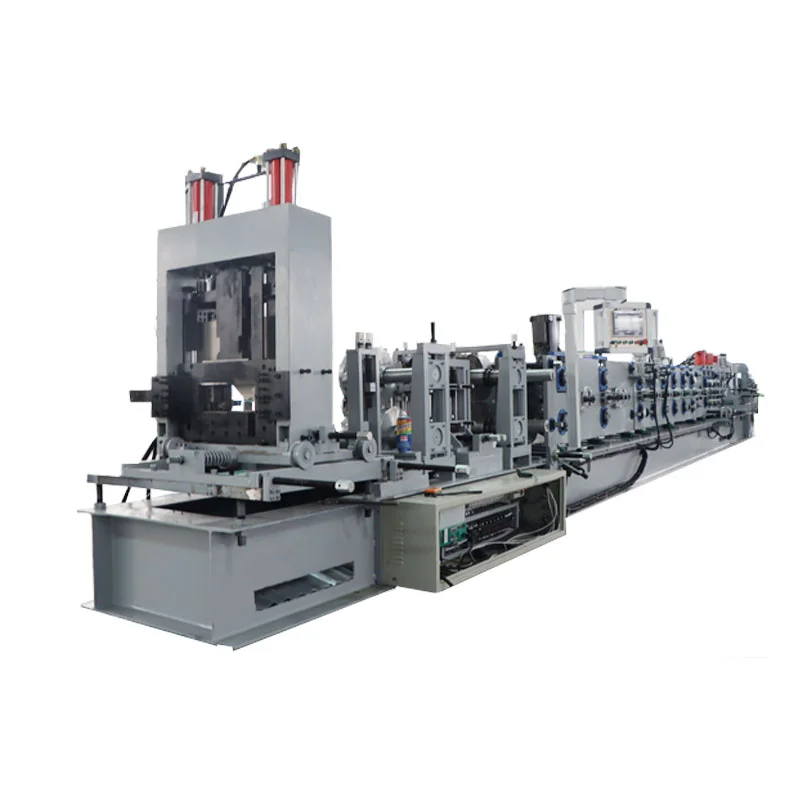
A highway guardrail machine is a specialized industrial cold-roll forming system designed to transform flat metal coils into specific W-beam, Thrie-beam, or box-beam profiles. The process involves a series of rollers that gradually bend the steel into the required shape without removing any material, ensuring the strength of the metal remains intact. This method is far superior to pressing or casting because it maintains a consistent cross-section over long lengths of material.
Beyond simple shaping, these machines integrate critical functions such as decoiling, leveling, punching for bolt holes, and precision cutting. By automating these steps, the machine removes the variability associated with manual fabrication. In the broader industrial ecosystem, this equipment serves as the primary production tool for road safety manufacturers, bridging the gap between raw steel production and the final installation on highways.
The industrial role of the highway guardrail machine extends to supporting regional infrastructure projects. Whether it is a national highway expansion in Southeast Asia or a bridge safety upgrade in Europe, the ability to produce standardized components locally reduces transport costs and ensures that the materials used meet the specific environmental and safety regulations of the host country.
Core Components Driving Production Precision
The precision of a highway guardrail machine is rooted in its high-strength roller stations. Each roller is precision-machined and often undergoes heat treatment and chrome plating to prevent wear and tear. This ensures that the profile dimensions remain consistent even after producing thousands of meters of guardrail, which is vital for the seamless interlocking of panels during field installation.
Central to the operation is the PLC (Programmable Logic Controller) system. This "brain" of the highway guardrail machine manages the synchronization between the feeding speed and the hydraulic cutting system. By allowing operators to input exact lengths and punching positions, the PLC minimizes human error and guarantees that every piece of guardrail meets the exact technical drawing specifications.
Furthermore, the integration of an automatic punching system is a critical efficiency driver. By creating precise bolt holes during the forming process, the highway guardrail machine eliminates the need for secondary drilling. This not only speeds up the production cycle but also ensures that the holes are perfectly aligned, which is essential for the structural stability of the guardrail when bolted to the support posts.
Operational Efficiency and Scalability Factors
Achieving high throughput in guardrail production requires a balance between speed and material integrity. A high-performance highway guardrail machine utilizes servo-driven feeding systems and optimized hydraulic circuits to maintain a steady production pace. Scalability is achieved by modular designs, allowing manufacturers to add additional forming stations or integrated stacking systems to handle larger order volumes without compromising quality.
Reducing material waste is another key efficiency metric. Through precision cutting and accurate decoiling, the highway guardrail machine ensures that scrap metal is kept to an absolute minimum. This not only lowers the cost per unit but also aligns with modern sustainable manufacturing practices by reducing the carbon footprint associated with steel waste.
Performance Comparison of Highway Guardrail Machine Configurations
Real-World Applications in Global Infrastructure
In large-scale highway projects across North America and Europe, the use of a highway guardrail machine ensures that thousands of kilometers of roads are equipped with barriers that meet strict MASH (Manual for Assessing Safety Hardware) criteria. These applications often require specialized profiles that can absorb specific kinetic energy levels, a task that only precision roll-forming equipment can handle consistently.
In emerging economies, such as those in Africa and Southeast Asia, these machines are being deployed to support rapid urbanization and the construction of new arterial roads. By implementing a local highway guardrail machine, governments can reduce their reliance on expensive imports, foster local industrial growth, and ensure that road safety infrastructure is deployed quickly to prevent accidents in high-traffic corridors.
Long-Term Value and Safety Advantages
The long-term value of investing in a premium highway guardrail machine lies in the reliability of the end product. When guardrails are produced with consistent thickness and profile geometry, they perform predictably during impacts. This reliability reduces the likelihood of "pocketing" or "vaulting," where a vehicle might break through or launch over the barrier, thereby maximizing the safety and dignity of road users.
From a financial perspective, the durability of the machinery itself provides significant ROI. Heavy-duty steel frames and wear-resistant rollers ensure that the machine can operate for decades with minimal downtime. This operational stability allows manufacturers to secure long-term government contracts, as they can guarantee consistent delivery schedules and quality standards.
Ultimately, the social impact of the highway guardrail machine is immeasurable. By enabling the mass production of affordable, high-standard safety barriers, this technology contributes to a global reduction in road trauma. The trust that drivers place in the road infrastructure is built upon the precision of the machines that create it.
Future Trends in Automation and Sustainable Manufacturing
The future of the highway guardrail machine is trending toward "Industry 4.0" integration. We are seeing the rise of IoT-enabled machines that can monitor roller wear in real-time and predict maintenance needs before a failure occurs. This transition to predictive maintenance will virtually eliminate unplanned downtime and ensure that production quality never dips.
Sustainability is also becoming a core design driver. Future iterations of these machines are focusing on energy-efficient hydraulic systems and the ability to process recycled steel coils without sacrificing structural strength. As global policies push for "Green Infrastructure," the highway guardrail machine is evolving to support a circular economy in metal manufacturing.
Digital twin technology is another emerging trend, where a virtual model of the production line is used to simulate different profiles and speeds before physical production begins. This allows for rapid prototyping of new guardrail designs, enabling engineers to create safer, more efficient barriers that can adapt to the evolving nature of modern vehicle weights and speeds.
Technical Analysis of Highway Guardrail Machine Production Standards
| Equipment Grade | Precision Tolerance | Production Speed | Material Compatibility |
|---|
| Entry Level | ± 1.5mm | Low (Manual) | Mild Steel Only |
| Standard Industrial | ± 0.8mm | Medium (Semi-Auto) | Galvanized Steel |
| Advanced PLC | ± 0.5mm | High (Full-Auto) | High-Strength Alloy |
| Precision Servo | ± 0.3mm | Very High (CNC) | Coated / Stainless |
| Custom Enterprise | ± 0.2mm | Ultra High (Modular) | Custom Alloys |
| Next-Gen Green | ± 0.2mm | Optimized (Eco) | Recycled Steel |
FAQS
A standard machine typically requires manual intervention for cutting and feeding, leading to slower production and higher variance in length. A full-automatic highway guardrail machine integrates PLC control and servo motors to handle decoiling, punching, forming, and cutting in one continuous cycle, ensuring absolute consistency and significantly higher output speeds.
Yes, depending on the configuration. While a specific set of rollers is designed for one profile, many high-end highway guardrail machines are modular, allowing for the replacement of roller stations to switch between W-beam, Thrie-beam, or box-beam profiles to meet different road safety requirements.
Cold roll forming is a gradual process. Instead of bending the metal in one sharp move (which can cause stress fractures), the highway guardrail machine uses a series of rollers to shape the metal incrementally. This preserves the material's molecular structure and ensures the guardrail retains its intended tensile strength.
The most common material is hot-dip galvanized steel, as it provides the necessary strength and superior corrosion resistance for outdoor exposure. Some specialized projects use stainless steel or high-strength low-alloy (HSLA) steels, which can be processed by a high-performance highway guardrail machine.
Absolutely. Leading manufacturers offer customizable punching systems for their highway guardrail machines. This allows operators to adjust the size, shape, and spacing of bolt holes to comply with specific national standards, such as AASHTO in the US or EN 1317 in Europe.
Routine maintenance usually involves lubricating transmission parts and inspecting roller alignment every few hundred hours of operation. However, machines using chrome-plated rollers and heat-treated shafts require far less frequent intervention, ensuring that the precision of the highway guardrail machine remains stable over years of use.
Conclusion
The integration of a professional highway guardrail machine into the industrial production chain is more than a business investment; it is a commitment to global road safety. By combining PLC automation, precision roll-forming, and high-strength material processing, these machines ensure that the barriers protecting millions of drivers are consistent, durable, and reliable. The transition from manual fabrication to high-speed automated production has not only reduced costs and waste but has standardized the safety protocols that save lives every day.
Looking forward, the evolution of this technology toward IoT integration and sustainable manufacturing will further enhance the efficiency of infrastructure development. As urban road networks expand and vehicle technology evolves, the demand for even more precise and adaptable safety barriers will grow. We encourage manufacturers and infrastructure developers to embrace these technological advancements to build a safer, more sustainable future for global transportation. Visit our website for more professional solutions: www.hyrollformingmachine.com