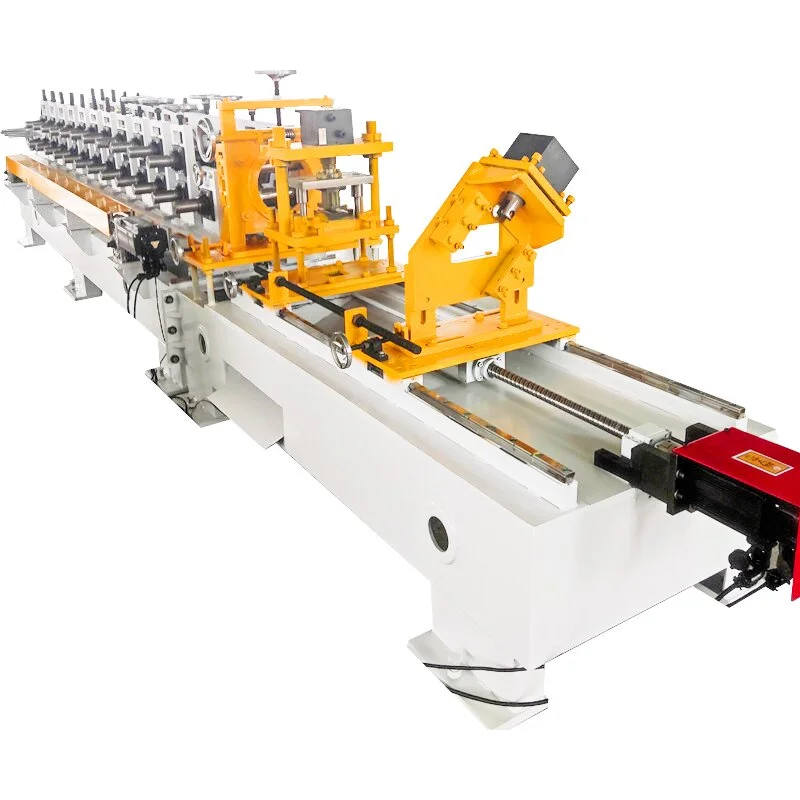
The global transition toward renewable energy has placed an unprecedented demand on the structural integrity of solar installations. A high-performance Photovoltaic bracket making machine is no longer just a piece of industrial equipment; it is the foundation of the green energy revolution, ensuring that solar panels are securely mounted and optimized for maximum energy capture.
Precision in the manufacturing of solar mounting systems is critical because these structures must withstand extreme weather conditions, from heavy snow loads to hurricane-force winds, over a lifespan of 25 years or more. By utilizing advanced roll forming technology, manufacturers can produce consistent, high-strength profiles that reduce installation time and material waste.
Understanding the nuances of a Photovoltaic bracket making machine allows industry stakeholders to balance cost-efficiency with structural safety. From the integration of CNC-machined rollers to the use of high-grade galvanized steel, the evolution of these machines reflects the broader industrial shift toward automation and sustainable infrastructure.

Global Relevance of Photovoltaic Bracket Production
As nations strive to meet the carbon neutrality goals set by the Paris Agreement, the deployment of solar farms has surged globally. The demand for a reliable Photovoltaic bracket making machine has grown proportionally, as these machines provide the necessary infrastructure to support millions of panels across diverse terrains, from desert plains to urban rooftops.
The primary challenge in this industry is maintaining a high throughput of components without sacrificing dimensional accuracy. Inconsistent bracket profiles can lead to alignment issues during installation, increasing labor costs and potentially compromising the structural integrity of the entire solar array under environmental stress.
Defining the Photovoltaic Bracket Making Machine
A Photovoltaic bracket making machine is a specialized industrial roll forming system designed to transform coils of galvanized steel or aluminum into precise structural profiles used for solar panel mounting. These machines use a series of staggered rollers to gradually bend the metal into a specific cross-section, such as C-channels or Z-purlins, which offer the ideal strength-to-weight ratio for supporting heavy photovoltaic modules.
Beyond simple bending, modern systems integrate CNC punching and hydraulic cutting, allowing for the creation of "ready-to-assemble" parts. This means that holes for bolts and fasteners are punched with micron-level precision before the material is cut to length, eliminating the need for secondary drilling on the job site.
In the context of modern humanitarian and industrial needs, these machines facilitate the rapid deployment of off-grid power solutions. Whether providing electricity to remote villages in Africa or supporting large-scale industrial parks in Asia, the efficiency of the production line directly impacts the speed at which clean energy can be delivered to the world.
Core Components for Precision Engineering
The heart of a Photovoltaic bracket making machine lies in its roller stations. CNC-machined rollers are engineered to apply precise pressure, ensuring that the galvanized coating remains intact and free from scratches, which is essential for preventing corrosion in humid or salty coastal environments.
Automation is handled by a PLC-controlled touch screen, which allows operators to adjust the length and bending angles of the brackets in real-time. This flexibility ensures that the machine can produce various profiles to suit different solar panel brands and mounting requirements without extensive downtime for retooling.
Supporting the forming process are the auxiliary units: the automatic decoiler for seamless material feeding, the leveling device to remove coil memory, and the high-speed flying cut-off system. These components work in synchronization to ensure that the production line maintains a constant flow, maximizing hourly output.
Operational Efficiency and Cost Impact
Operational efficiency in solar bracket production is measured by the reduction of material waste and the minimization of manual labor. By utilizing a Photovoltaic bracket making machine with pre-punching and pre-cutting capabilities, manufacturers can significantly lower their overhead costs and reduce the physical footprint of the production line.
Furthermore, the transition from traditional fabrication to automated roll forming reduces the "cost per unit" by enabling mass production. This scalability allows companies to respond quickly to market spikes, such as government-funded solar initiatives, while maintaining a consistent quality standard across millions of parts.
Efficiency Comparison of Photovoltaic Bracket Production Methods
Global Applications and Deployment Use Cases
The output from a Photovoltaic bracket making machine is deployed across a vast array of environments. In large-scale utility solar farms in regions like the American Southwest or the Gobi Desert, high-strength C and Z profiles are used to create ground-mount systems that can be quickly installed across thousands of acres.
In urban settings, these machines produce specialized lightweight brackets for rooftop installations, where weight limits and wind uplift are primary concerns. Additionally, in remote industrial zones, the ability to produce modular, easy-to-transport brackets ensures that solar power can be established in areas where traditional construction infrastructure is lacking.
Long-term Value and Sustainability Benefits
Investing in a high-quality Photovoltaic bracket making machine provides tangible long-term value by ensuring the longevity of the solar energy infrastructure. Brackets produced with high precision and optimal galvanized coatings resist rust and degradation, meaning that solar arrays do not require expensive structural replacements throughout their lifecycle.
From a sustainability perspective, roll forming is inherently more eco-friendly than traditional stamping or casting. It minimizes material scrap and uses energy-efficient drive systems, reducing the carbon footprint of the manufacturing process itself. This creates a "green loop" where the equipment used to build renewable energy systems is also produced sustainably.
Moreover, the reliability of these components fosters trust among investors and homeowners. When a solar installation is known to be supported by precision-engineered brackets, the perceived risk of structural failure decreases, encouraging wider adoption of solar technology in disaster-prone or high-wind areas.
Future Innovations in Solar Mounting Tech
The future of the Photovoltaic bracket making machine is trending toward "Industry 4.0" integration. We are seeing the introduction of IoT sensors within the roller stations to monitor wear and tear in real-time, allowing for predictive maintenance that eliminates unplanned downtime.
Additionally, there is a shift toward using advanced alloys and composite-coated steels that offer even higher corrosion resistance than standard galvanization. New machine designs are incorporating "multi-profile" capabilities, allowing a single production line to switch between five or six different bracket designs via a simple software command, drastically increasing market agility.
As the world moves toward bifacial solar panels and tracking systems, the brackets will become more complex. Future machines will likely integrate automated bending and twisting modules, enabling the creation of dynamic supports that allow panels to follow the sun, further increasing energy yield.
Analysis of Future Technological Trends in Photovoltaic Bracket Manufacturing
| Innovation Area | Technical Implementation | Impact on Production | Sustainability Score (1-10) |
|---|
| IoT Integration | Real-time roller wear sensors | Zero unplanned downtime | 8 |
| Material Science | Zinc-Aluminum-Magnesium coating | Extended lifespan in salt spray | 9 |
| Modular Tooling | Quick-change roller cassettes | Rapid profile switching | 7 |
| AI Optimization | Auto-calibration of pressure | Reduced material scrap | 10 |
| Energy Efficiency | Servo-driven motors | Lower electricity consumption | 9 |
| Hybrid forming | Roll + Press integration | Complex geometric shapes | 7 |
FAQS
The primary advantage is the ability to produce high volumes of components with extreme dimensional consistency. Unlike manual bending or stamping, a Photovoltaic bracket making machine ensures that every single piece is identical, which is crucial for the rapid, "lego-like" assembly of large solar arrays in the field, significantly reducing labor costs and installation errors.
Yes, modern machines are designed for flexibility. While the basic roller configuration is set for a specific profile, many high-end machines feature adjustable roller stations or quick-change cassettes. This allows manufacturers to switch between different C-channel or Z-purlin sizes to meet the specifications of different solar panel brands without needing to purchase entirely new equipment.
Our machines utilize CNC-machined, polished rollers and precisely controlled pressure systems. By ensuring the rollers are perfectly aligned and the surface finish is smooth, the machine shapes the steel without scratching or peeling the galvanized layer. This preserves the anti-corrosion properties of the steel, ensuring the brackets last for decades in outdoor environments.
Absolutely. Most professional Photovoltaic bracket making machines integrate pre-punching and hydraulic cutting. This means holes for fasteners are punched into the strip before it is rolled and cut to length. This integration eliminates the need for secondary machining, reduces manual labor, and ensures that hole placement is accurate to within fractions of a millimeter.
The most common materials are hot-dip galvanized steel and aluminum alloys. Galvanized steel is preferred for ground-mount utility projects due to its strength and cost-effectiveness, while aluminum is often used for rooftop installations to reduce the load on the building structure. The machine is engineered to handle the specific tensile strengths of these materials.
Regular maintenance involves lubricating the drive chains and gearboxes, inspecting the rollers for wear, and calibrating the PLC sensors. Using hardened rollers significantly extends the machine's life. We recommend a monthly check-up of the hydraulic systems and ensuring that the decoiler is properly aligned to prevent material skewing during high-speed production.
Conclusion
The adoption of a professional Photovoltaic bracket making machine is a strategic investment that bridges the gap between raw material and sustainable energy infrastructure. By combining precision roll forming, automated CNC punching, and high-grade material handling, manufacturers can ensure that the world's solar panels are supported by structures that are durable, efficient, and cost-effective.
Looking ahead, the integration of AI-driven optimization and advanced alloys will further refine the production of solar mounting systems. For businesses aiming to lead in the renewable energy sector, upgrading to automated, flexible production lines is not just an operational choice but a necessity for scaling the global transition to clean energy. Visit our website for more information: www.hyrollformingmachine.com