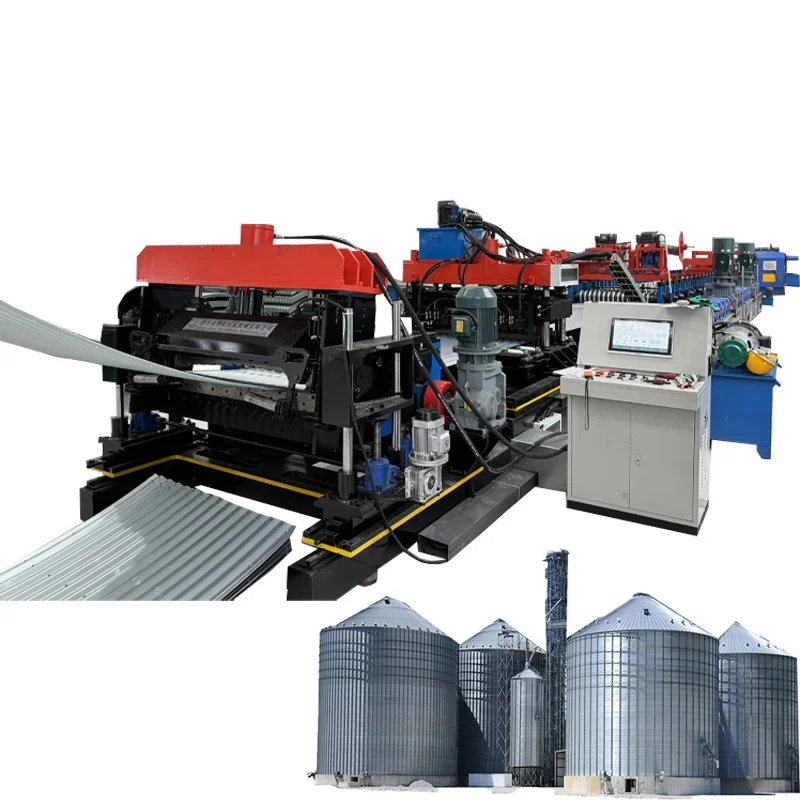


When evaluating the structural integrity of modern steel buildings, the precision of the primary support members is paramount. For many contractors, the challenge lies in sourcing a China c purlin forming machine that balances high-speed output with strict dimensional tolerance. The C-purlin, characterized by its distinctive C-shaped cross-section, serves as a critical horizontal beam that supports roof panels or wall cladding, making the accuracy of its production directly linked to the overall safety and stability of the infrastructure.
This requirement for precision is not merely a matter of quality control but a significant driver of operational cost. In the broader context of the metal forming industry—spanning from grain silo sheet roll forming to complex highway guardrail production—the purlin forming process represents a fundamental intersection of material science and mechanical engineering. If the forming rollers are not perfectly aligned, the resulting purlins may suffer from twist or bow, leading to costly delays during the assembly phase of a construction project.
Understanding the technical nuances of the roll forming process allows buyers to move beyond simple price comparisons and focus on long-term ROI. By analyzing the interaction between material thickness, roller hardness, and control systems, stakeholders can optimize their production lines for maximum efficiency. This guide examines the critical factors that define a high-performance China c purlin forming machine and how to select a configuration that meets specific industrial load requirements.


Cold roll forming is a continuous bending operation where a long strip of metal is passed through consecutive sets of rollers. For a C-purlin, the process involves gradually shaping the flat galvanized steel coil into a "C" profile through a series of precise increments. This ensures that the material does not crack or experience excessive internal stress, which would compromise the structural integrity of the beam. The machine typically integrates a decoiler, a forming mill, and a cutting system to produce pieces of exact lengths.
The core of the system relies on the geometry and hardness of the rollers. Each station in the forming mill performs a specific part of the bend; if one station is misaligned, the error propagates through the rest of the line. High-grade alloys are used for the rollers to prevent wear over thousands of cycles, ensuring that the dimensions of the purlins remain consistent from the first piece to the ten-thousandth. This mechanical stability is what allows for the mass production of structural components used in warehouses and industrial plants.
Material consistency is the first variable. The yield strength and thickness of the galvanized steel coil must be uniform; variations in the gauge can lead to "spring-back," where the metal partially returns to its original shape after leaving the rollers. To counteract this, precision machines utilize adjustable roller gaps and sophisticated tensioning systems that maintain a constant feed rate, reducing the risk of longitudinal warping.
The alignment of the drive system is the most critical factor for long-term quality. A precision gear box drive ensures that all rollers rotate in perfect synchronization, eliminating micro-slips that cause dimensional drift. When synchronized with a PLC control system, the machine can maintain tolerances within fractions of a millimeter, even during high-speed operation.
Finally, the lubrication and cooling of the rollers play a subtle but vital role. Excessive friction generates heat, which can lead to thermal expansion of the rollers and subsequent changes in the profile dimensions. Implementing an automated lubrication hub ensures that the mechanical components operate smoothly, extending the lifecycle of the equipment and maintaining the precision of the output without frequent manual recalibration.
In the context of large-scale industrial projects, the value of a high-efficiency forming line is measured by the reduction in on-site waste and labor. When purlins are formed with absolute accuracy, the assembly of the roof truss becomes a "plug-and-play" process. This eliminates the need for workers to manually adjust or force beams into place, significantly accelerating the project timeline and reducing the risk of structural weaknesses caused by improper fitting.
Precision roll forming delivers maximum value when integrated into a complete production line, where pre-punching and automatic cutting reduce human error. By minimizing material scrap through optimized length calculations in the PLC, companies can reduce raw material costs by 3-5% per project, which represents a substantial saving in high-tonnage infrastructure works.
Furthermore, the ability to customize profiles according to specific engineering drawings allows for the creation of optimized beams that provide the necessary load-bearing capacity without adding unnecessary weight. This material optimization not only lowers the total cost of the structure but also reduces the energy required for transportation and installation, contributing to a more sustainable construction workflow.
Different machine configurations offer varying levels of throughput and precision. Manual adjustment lines are suitable for low-volume, highly variable workshops, but they lack the speed and consistency required for industrial supply. In contrast, fully automated lines with PLC integration and high-torque gearboxes can operate continuously, producing thousands of meters of purlins per shift with minimal supervision.
When comparing mechanical pre-cutting systems to traditional hydraulic shearing, the former typically demonstrates higher operational speeds and a smaller physical footprint. By removing the reliance on heavy hydraulic pumps for every cut, the production cycle is shortened, and energy consumption is reduced, leading to a more streamlined manufacturing process.
The C-purlin is the backbone of pre-engineered metal buildings (PEMB). Its primary application is in the roofing and walling of industrial warehouses, aircraft hangars, and agricultural sheds. In these scenarios, the C-profile is placed perpendicular to the main rafters, providing the necessary support for the corrugated metal sheets. The high strength-to-weight ratio makes it an ideal choice for spanning large distances without requiring excessive intermediate supports.
Beyond traditional construction, these profiles are increasingly used in solar panel mounting frames and temporary modular housing. In solar installations, the resistance to corrosion—provided by the galvanized coating and the structural rigidity of the C-shape—ensures that the panels remain secure under wind loads and environmental stress for decades. This versatility demonstrates how a single roll forming solution can serve multiple high-growth industries.
The industry is moving away from simple mechanical drives toward intelligent, data-driven production. Modern systems now incorporate real-time monitoring sensors that can detect deviations in the profile as it exits the mill. If a deviation is detected, the PLC can alert the operator or, in advanced systems, make micro-adjustments to the roller pressure to correct the error on the fly.
Another significant trend is the shift toward multi-profile capability. Rather than having separate machines for C, Z, and U purlins, manufacturers are developing interchangeable roller cassettes. This allows a single production line to switch between different profile shapes in a matter of hours, drastically increasing the factory's flexibility and allowing them to respond more quickly to diverse customer requirements.
Additionally, there is a growing emphasis on energy-efficient drive systems. By utilizing variable frequency drives (VFDs) and high-efficiency gearboxes, the latest generation of roll forming machines reduces electrical overhead while providing more precise control over the material feed speed, which is essential for maintaining quality during the acceleration and deceleration phases of the production cycle.
One of the most frequent challenges in purlin production is "edge wave," where the edges of the C-profile ripple due to uneven material stretching. This is typically solved by optimizing the roller sequence to ensure that the metal is bent in a more gradual, controlled manner, distributing the tension more evenly across the width of the strip.
Another issue is the wear and tear of rollers when processing high-strength steel. Using standard carbon steel rollers leads to frequent downtime for regrinding. The solution is the application of chrome plating or the use of tungsten carbide inserts in high-pressure zones, which significantly extends the service life of the rollers and maintains the profile's dimensional accuracy.
Finally, integrating the cutting process without scratching the galvanized surface is a common pain point. By using precision mechanical shears with reinforced blades and optimized guiding systems, manufacturers can ensure a clean cut that preserves the protective zinc coating, preventing premature corrosion of the finished product.
| Challenge | Primary Cause | Technical Solution | Expected Result |
|---|---|---|---|
| Edge Wave | Uneven Stretching | Optimized Roller Sequence | Smooth Edges |
| Profile Twist | Roller Misalignment | Precision Gear Box Drive | Straight Alignment |
| Rapid Roller Wear | High-Strength Steel | Chrome Plated Rollers | Extended Lifespan |
| Spring-Back | Material Elasticity | Adjustable Roller Gaps | Exact Angles |
| Surface Scratches | Rough Guide Rollers | Hardened Steel Guides | Pristine Finish |
| Length Inaccuracy | Sensor Calibration | PLC Encoder Sync | Millimeter Precision |
While both use the roll forming process, Z-purlins are designed to overlap each other at the supports, providing continuous support for the roof. This requires a different roller configuration to ensure the Z-shape is perfectly symmetrical. A C-purlin machine is optimized for a closed-loop "C" profile, which is typically used in wall cladding or as primary roof supports where overlapping is not required.
Material thickness determines the required torque of the drive system and the hardness of the rollers. Thicker steel requires more powerful gearboxes and reinforced frames to prevent the machine from flexing under pressure. If a machine designed for 1.5mm steel is used for 3.0mm steel, it will likely suffer from premature gear failure and loss of dimensional accuracy.
Yes, if the machine is equipped with adjustable rollers or interchangeable roller cassettes. Basic machines are fixed to one size, but professional industrial lines allow for a range of widths and heights. This is achieved by adjusting the lateral position of the rollers or swapping out the forming stations to match a new profile drawing.
A PLC system allows for digital precision in cutting lengths and production counts, virtually eliminating human error. It enables the operator to set a specific length on a touch screen, and the system automatically synchronizes the feed speed with the cutter. This increases throughput and ensures that every piece in a batch is identical, which is critical for structural assembly.
Daily lubrication is essential to prevent friction-induced wear. A full inspection of the roller alignment and gear levels should be conducted monthly. For high-volume production lines, rollers should be checked for wear every 50,000 meters of production. Regular maintenance prevents the "dimensional drift" that can lead to rejected batches of structural steel.
Galvanized steel is the most common due to its corrosion resistance, but these machines can also process cold-rolled steel or prepainted steel coils. The key is ensuring that the roller material is compatible with the coating of the steel to avoid peeling or scratching the surface during the forming process.
The selection of a China c purlin forming machine is a strategic decision that impacts every stage of a construction project, from raw material procurement to final site assembly. By prioritizing drive system stability, roller precision, and PLC integration, manufacturers can ensure a consistent output that meets rigorous industrial safety standards. The shift toward automated, high-precision roll forming not only reduces operational waste but also enhances the overall structural reliability of the buildings they support.
For enterprises looking to optimize their metal profiling capabilities or customize a production line to meet specific architectural requirements, technical expertise in cold roll forming is indispensable. Exploring a comprehensive range of solutions can help in reducing long-term overhead and improving competitiveness in the infrastructure market. For more detailed technical specifications and customization options, you may visit the resources available at https://www.hyrollformingmachine.com.