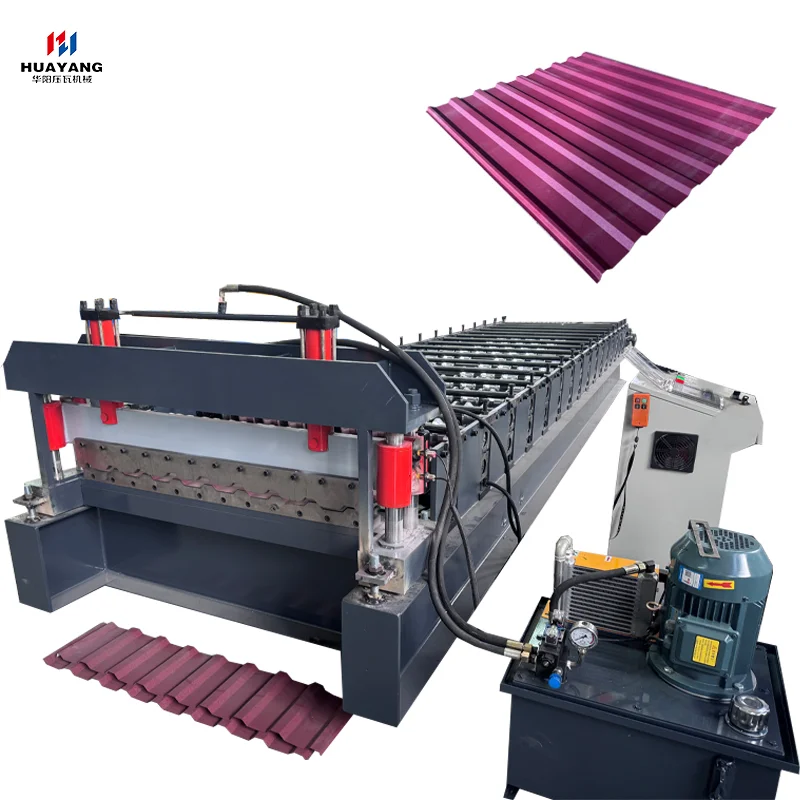
A China roofing sheet roll forming machine is a specialized industrial system designed to transform flat metal coils into precise, profiled roofing panels through a sequential process of cold rolling. By passing the metal through a series of rollers, the machine bends the material into specific shapes—such as corrugated or trapezoidal profiles—ensuring structural rigidity and weather resistance for residential and industrial buildings.
For construction manufacturers, the challenge often lies in balancing production speed with dimensional accuracy. Traditional forming methods can suffer from inconsistent profiles or high material scrap rates, which directly impact the profitability of large-scale projects. Implementing high-precision cold roll forming technology is essential to mitigate these risks and meet modern architectural standards.
This article provides a comprehensive technical analysis of roll forming machinery, exploring its operational mechanics, procurement criteria, and the specific advantages of utilizing industrial-grade precision engineering. Whether you are optimizing an existing production line or investing in new equipment, this guide will help you evaluate the best solutions for your operational needs.

1Fundamentals of Cold Roll Forming Technology


The process begins with a decoiler that feeds a metal coil into the forming line. The metal is then passed through a series of rollers, each slightly modifying the shape of the sheet. Unlike pressing or stamping, roll forming is a continuous process, meaning the profile is created gradually over several stations. This prevents material stress and ensures that the final roofing sheet maintains high structural integrity without cracking.
Precision is the most critical factor in this technology. Even a minor deviation in roller alignment can lead to "bowing" or "twisting" of the finished panel. High-end machinery utilizes CNC control systems to ensure that each station is perfectly synchronized, allowing for the production of complex profiles with tolerances measured in fractions of a millimeter.
From a manufacturing standpoint, this process is highly scalable. Because it is a continuous line, production speeds can be adjusted based on the desired output, making it an ideal solution for everything from custom architectural projects to mass-market industrial roofing sheets.
2Core Technical Features and Operational Value
A professional China roofing sheet roll forming machine is characterized by its durability and versatility. Key features include high-strength alloy rollers that resist wear and tear, reducing the frequency of maintenance and ensuring consistent profile quality over millions of cycles. Additionally, the integration of automated cutting systems allows the machine to produce panels of exact lengths without stopping the line.
Operational value is realized through the reduction of material waste. Because the machine is designed for precision, the "edge trim" and "end scrap" are minimized. This efficiency is particularly important when processing high-cost materials like aluminum or specialty coated steels.
Furthermore, the ability to customize profile drawings allows manufacturers to adapt quickly to market changes. Whether the project requires a deep-ribbed industrial profile or a subtle residential aesthetic, the machine's design can be adjusted to meet specific customer profile drawings, enhancing competitiveness in a crowded market.
3Application Scenarios in Modern Construction
These machines are primarily used in the production of metal roofing and wall panels, but their utility extends to a wide array of structural components. In industrial settings, they produce the large-span corrugated sheets used for warehouses and factories. In agricultural sectors, roll forming is used to create everything from grain silo sheets to specialized feed troughs and greenhouse gutters.
The versatility of the equipment allows for the creation of C, Z, and U purlins, which serve as the essential skeletal support for roof structures. By automating the production of these components, construction firms can significantly reduce on-site fabrication time and labor costs, moving toward a "prefab" model of building.
Additionally, these machines are employed in urban infrastructure for the production of highway guardrails and door frames. The consistency provided by the roll forming process ensures that every piece fits perfectly, which is a critical safety requirement for public infrastructure projects.
4Performance Metrics and Efficiency Analysis
Evaluating the performance of a roll forming machine requires looking beyond simple production speed. Key metrics include the precision rate (the percentage of panels meeting exact specifications), the energy consumption per linear meter, and the setup time required to switch between different profiles.
When comparing high-precision Chinese machinery to standard industry averages, the most significant gains are found in the reduction of material waste and the increase in output consistency. Automated monitoring modules allow operators to detect deviations in real-time, preventing the production of defective batches.
China roofing sheet roll forming machine Performance Metrics
The data indicates that precision engineering not only speeds up the process but also lowers the overall cost of ownership. While the initial investment in a high-precision machine may be higher, the ROI is realized quickly through lower labor requirements and the ability to serve high-end clients who demand strict architectural tolerances.
5Procurement Guide and Selection Criteria
Selecting the right machinery involves a careful analysis of the intended output. Buyers should first define the range of material thicknesses they intend to process and the specific profiles required. A machine that is too rigid may not allow for future profile expansions, while one that is too flexible may lack the stability needed for high-speed production.
Another critical consideration is the after-sales support network. Because roll forming machines are complex systems, access to installation guidance and operator training is essential. A supplier that can provide a complete line—from decoiler to cutter—reduces the integration risks associated with buying components from multiple vendors.
Finally, potential buyers should evaluate the control system. PLC-based systems with intuitive interfaces reduce the likelihood of human error and allow for faster adjustments, which is vital for companies handling a high volume of custom, short-run orders.
6Industry Trends and Sustainable Manufacturing
The roll forming industry is shifting toward "green" manufacturing. This includes the integration of energy-efficient motors and the ability to process upcycled or reclaimed metal materials. By reducing the carbon footprint of the production process, manufacturers can meet stricter environmental regulations and appeal to eco-conscious developers.
Digitalization is also playing a major role. The trend toward "Smart Factories" involves connecting roll forming machines to a centralized ERP system, allowing for automated order processing where the machine automatically adjusts its settings based on the digital order file.
Future developments are likely to focus on "interchangeable" roller sets, allowing a single machine base to produce five or six different profiles simply by swapping the roller cassettes. This versatility will allow smaller firms to offer a wider product range without investing in multiple machines.
7Comparative Analysis of Forming Solutions
Choosing between different forming technologies requires understanding the trade-offs between speed, cost, and flexibility. While traditional press braking is suitable for very low-volume custom work, it cannot compete with the efficiency of a roll forming line for any repetitive profile.
The following table compares the standard industrial approach with the high-precision solutions typically offered by specialized manufacturers like Botou Huangyang, focusing on the operational impact on a production facility.
| Metric | Standard Press Brake | Generic Roll Former | Precision Roll Former |
|---|---|---|---|
| Production Speed | Low (Manual) | Medium (Auto) | High (CNC-Sync) |
| Dimensional Accuracy | Variable | Moderate | Very High |
| Material Waste | High | Medium | Minimal |
| Labor Requirement | High | Medium | Low |
| Setup Flexibility | High (Any Shape) | Low (Fixed) | Medium (Modular) |
| Initial Investment | Low | Medium | High |
In summary, for businesses scaling their operations, the precision roll former offers the lowest long-term cost per unit. The ability to maintain tight tolerances ensures fewer rejected parts and higher customer satisfaction, which outweighs the higher initial capital expenditure.
Frequently Asked Questions
Conclusion
Investing in a high-precision China roofing sheet roll forming machine is a strategic move for any manufacturer looking to optimize their production efficiency and product quality. By transitioning from manual or low-precision methods to automated cold roll forming, businesses can significantly reduce waste, lower labor costs, and expand their product offerings to include complex structural components like purlins and specialized roofing panels.
The key to long-term success lies in selecting equipment that balances current needs with future scalability. For those evaluating technical specifications and seeking reliable industrial solutions, detailed product information and customization options are available at www.hyrollformingmachine.com.