

Selecting the right machinery for metal profile production is often a balance between precision, output volume, and operational cost. For manufacturers focusing on structural steel, the ability to produce consistent, high-tolerance profiles is not just a quality requirement but a critical safety factor in construction.
The shift toward automated roll forming has fundamentally changed how industrial sheets and purlins are fabricated, moving away from manual adjustments toward PLC-driven precision. This evolution allows for tighter tolerances and significantly reduced material waste, which directly impacts the bottom line of steel fabrication plants.
Whether you are scaling a production facility or optimizing an existing line, understanding the technical nuances of a roofing sheet production machine and its integrated systems is essential for maintaining a competitive edge in the global metal processing market.


Cold roll forming is a continuous bending operation where a long strip of metal is passed through consecutive sets of rollers. Each station slightly alters the cross-section of the material until the desired profile is achieved. Unlike pressing, this process maintains the structural integrity of the steel by avoiding sudden deformations.
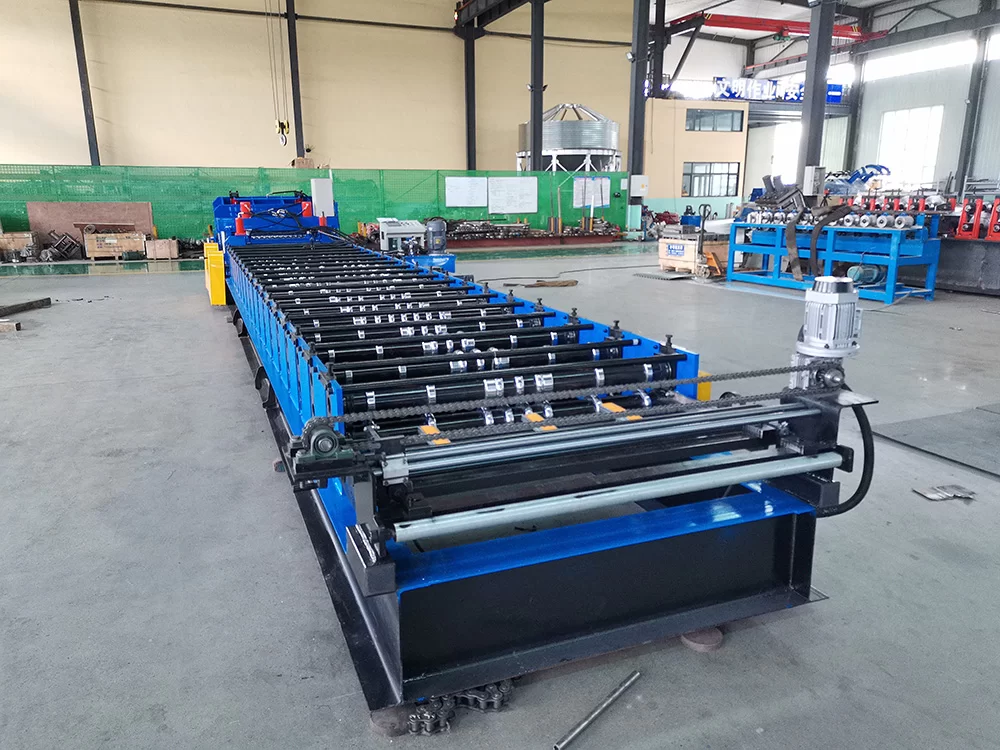
In the context of a roofing sheet production machine, the sequence of rollers must be perfectly calibrated to prevent "spring-back," a phenomenon where the metal attempts to return to its original flat shape. This requires precise engineering of the roller diameters and the distance between stations.
The accuracy of a roll forming line depends heavily on the quality of the rollers. High-grade alloy steel, often heat-treated or chrome-plated, is used to ensure that the rollers do not wear down under the constant friction of processing steel strips. Any deviation in roller diameter leads to inconsistencies in the final profile, which can cause alignment issues during onsite installation.
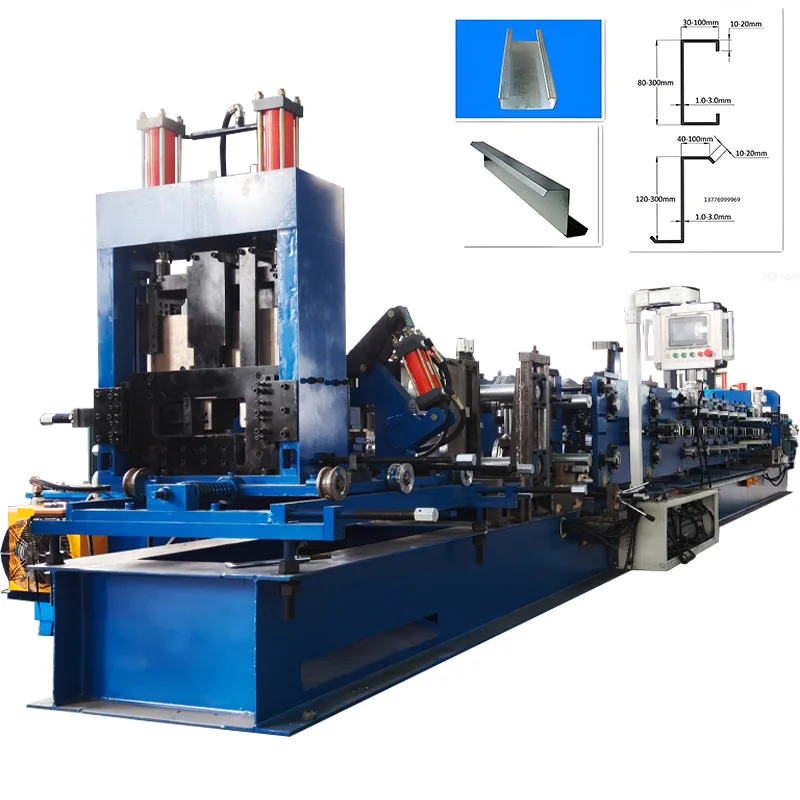
Supporting these rollers is the machine frame, which must be heavy-duty and rigid. A vibrating or flexing frame introduces micro-errors into the profile, especially when processing thicker materials. For instance, the Huayang CZ Purlin machines utilize reinforced chassis designs to handle the stresses of producing both C and Z profiles without compromising dimensional accuracy.
Finally, the integration of a precision punching system is vital. Automated punching allows for the exact placement of holes for bolts and connectors. When this is synchronized with the roll forming speed via an encoder, the hole positions remain consistent regardless of the production speed, eliminating the need for manual post-processing.
Modern steel fabrication has transitioned from manual lever-operated machines to fully integrated PLC (Programmable Logic Controller) systems. This shift allows operators to input specific lengths and punching patterns into a digital interface, which the machine then executes with repeatable precision.
PLC integration removes the volatility of human error in measurement, transforming the production process into a data-driven operation where complex specifications are stored as programs for instant recall.
This automation extends to the cutting phase. Hydraulic shearers, timed perfectly by the PLC, ensure that the cut length is accurate to within fractions of a millimeter. This level of control is particularly important for high-volume projects where hundreds of identical purlins are required, as it minimizes material scrap and assembly time.
Evaluating the performance of a production line requires looking beyond just "meters per minute." True efficiency is measured by the ratio of usable output to total material input, alongside the labor hours required per ton of finished steel. Automated systems typically show a marked increase in throughput while reducing the workforce needed for monitoring.
When comparing manual systems to automated PLC lines, the most significant gains are found in "changeover time." The ability to switch between different profiles, such as moving from a C-purlin to a Z-purlin, can be reduced from hours to minutes through smart tooling and stored digital parameters.
In a typical industrial setting, such as the construction of large-scale warehouses or aircraft hangars, the demand for structural purlins is immense. These components must support heavy roofing loads and resist wind uplift, making the dimensional accuracy of the forming machine a safety requirement. By using high-precision equipment, manufacturers can ensure that every purlin fits perfectly into the primary frame, reducing onsite welding and adjustment.
Furthermore, the versatility of modern machines allows for "just-in-time" production. Instead of storing vast quantities of pre-formed profiles, a factory can use its roll forming line to produce exact lengths as needed for a specific project phase. This reduces inventory costs and protects the finished steel from environmental corrosion during long-term storage.
The industry is moving toward "Smart Manufacturing," where machines are not only automated but also interconnected. Future roll forming lines will likely incorporate IoT sensors that monitor roller wear in real-time, alerting maintenance teams before a component fails and causes production downtime.
Another significant trend is the push for sustainable production. This involves reducing the energy consumption of heavy industrial motors and optimizing the cutting sequences to minimize steel scrap. Modern machines are increasingly engineered for lower power consumption without sacrificing the speed or torque required for thick-gauge materials.
We also anticipate a greater demand for customization. As architectural designs become more complex, the ability to quickly adapt a machine for unique profile shapes—through modular roller sets and flexible PLC programming—will become a key competitive advantage for equipment manufacturers.
Choosing a production system requires a structured analysis of project needs versus machine capabilities. A manufacturer producing small batches of diverse profiles needs flexibility and quick changeover, whereas a high-volume producer should prioritize maximum speed and durability of the roller stations.
Technical compatibility is another critical factor. The machine must be compatible with the available electrical infrastructure (such as 380V industrial standards) and the specific grades of steel being processed, as different coatings or hardness levels can affect roller wear.
Finally, the total cost of ownership includes not just the purchase price, but the cost of maintenance, energy, and the efficiency of the after-sales support network. A machine that offers comprehensive installation and training typically provides a faster return on investment by reducing the initial learning curve for operators.
| Evaluation Factor | Manual Systems | PLC Automated | Impact on ROI |
|---|---|---|---|
| Setup Time | High / Manual | Low / Programmed | Faster Project Turnaround |
| Dimensional Error | Variable | Highly Repeatable | Lower Waste Costs |
| Labor Cost | Multiple Operators | Single Operator | Reduced Overhead |
| Production Speed | Moderate | High Volume | Increased Capacity |
| Changeover Ease | Complex / Slow | Rapid / Digital | Greater Market Agility |
| Maintenance Need | Frequent Calibration | Predictive / Stable | Reduced Downtime |
A PLC system eliminates the variability inherent in manual operation. It precisely controls the timing of the hydraulic cutters and the positioning of the punching system based on real-time feedback from encoders. This ensures that every single piece produced matches the exact digital specification, leading to higher consistency across large batches and reducing the likelihood of onsite assembly errors.
Most roofing and purlin machines are designed for cold-rolled steel strips. Depending on the machine specifications, these can range from thin gauges (0.3mm) for light structural use up to thicker sheets (over 4mm) for heavy-duty industrial silos or tanks. Common materials include galvanized steel, Galvalume, and pre-painted steel, all of which require high-precision rollers to avoid scratching the surface coating.
Yes, certain advanced machines are engineered for versatility. For example, a CZ Purlin machine is specifically designed to switch between C-shaped and Z-shaped profiles. This is achieved through either interchangeable roller sets or a specialized forming logic that allows the machine to adapt its output based on the user's selection in the PLC interface, maximizing the utility of a single equipment investment.
Durability is determined by the material and treatment of the rollers. Look for rollers made from high-carbon alloy steel that have undergone precision grinding and surface hardening (such as chrome plating). These treatments reduce friction and prevent the rollers from wearing down, which is essential for maintaining dimensional accuracy over millions of meters of production.
While the initial investment for an automated line is higher, the ROI is realized through three primary channels: labor reduction, waste minimization, and increased throughput. By reducing the number of operators required and virtually eliminating manual measurement errors, manufacturers often find that the machine pays for itself through lower operational overhead and the ability to take on more projects per month.
Absolutely. Most professional systems are designed for modular integration. You can add decoilers at the front end to feed the machine automatically and stacking devices at the rear to organize finished profiles. This creates a seamless flow from raw steel coil to finished product, significantly reducing the manual handling of heavy metal sheets.
The transition toward high-precision, automated roll forming is no longer an option but a necessity for manufacturers aiming to compete in the modern structural steel market. By focusing on the synergy between heavy-duty mechanical engineering and smart PLC control, companies can achieve a level of consistency and efficiency that was previously impossible with manual systems.
Investing in a high-quality roofing sheet production machine is an investment in operational stability. As construction standards become more stringent and material costs rise, the ability to produce precise, zero-waste profiles will be the primary differentiator between successful fabrication plants and those struggling with inefficiency.