High Efficiency Industrial Grain Silo Making Machine Solutions

High Efficiency Industrial Grain Silo Making Machine Solutions

0%

Table of Contents

The global agricultural landscape is currently facing an unprecedented challenge: balancing skyrocketing food demand with the need to reduce post-harvest losses. A high-performance grain silo making machine serves as the cornerstone of modern food security, enabling the mass production of durable, airtight, and scalable storage solutions that protect harvests from pests, moisture, and degradation.        

       From an industrial perspective, the transition toward automated roll forming has revolutionized how storage infrastructure is deployed. By utilizing a sophisticated grain silo making machine, manufacturers can now produce precision-engineered sheets that assemble rapidly in the field, reducing labor costs and ensuring structural integrity across various climatic zones, from the humid tropics to arid plains.        

       Understanding the technical nuances of these machines—ranging from material thickness handling to corrugated profile precision—is essential for any stakeholder in the agribusiness supply chain. Investing in the right production technology not only optimizes operational efficiency but also provides a sustainable pathway toward stabilizing grain prices and enhancing the livelihood of farmers worldwide. 

Global Relevance of Grain Silo Production Technology


The necessity of a grain silo making machine is underscored by the World Bank's reports on food waste, which highlight that a significant percentage of grains in developing nations are lost due to inadequate storage. As the global population heads toward 9 billion, the ability to store surplus grain safely is no longer just a commercial advantage but a humanitarian imperative.            

           Industrial-scale production of silo components allows for the rapid rollout of storage networks in regions prone to seasonal harvest surges. By automating the rolling and cutting process, countries can transition from primitive storage methods to ISO-standard galvanized steel silos, drastically reducing the risk of fungal contamination and insect infestation.

Defining the Modern Grain Silo Making Machine

At its core, a grain silo making machine is a specialized roll forming system designed to transform flat coils of galvanized steel into high-strength, corrugated sheets. These sheets are the building blocks of corrugated grain silos, engineered to withstand the immense lateral pressure exerted by thousands of tons of stored grain while maintaining a lightweight, modular profile for easy transport.        

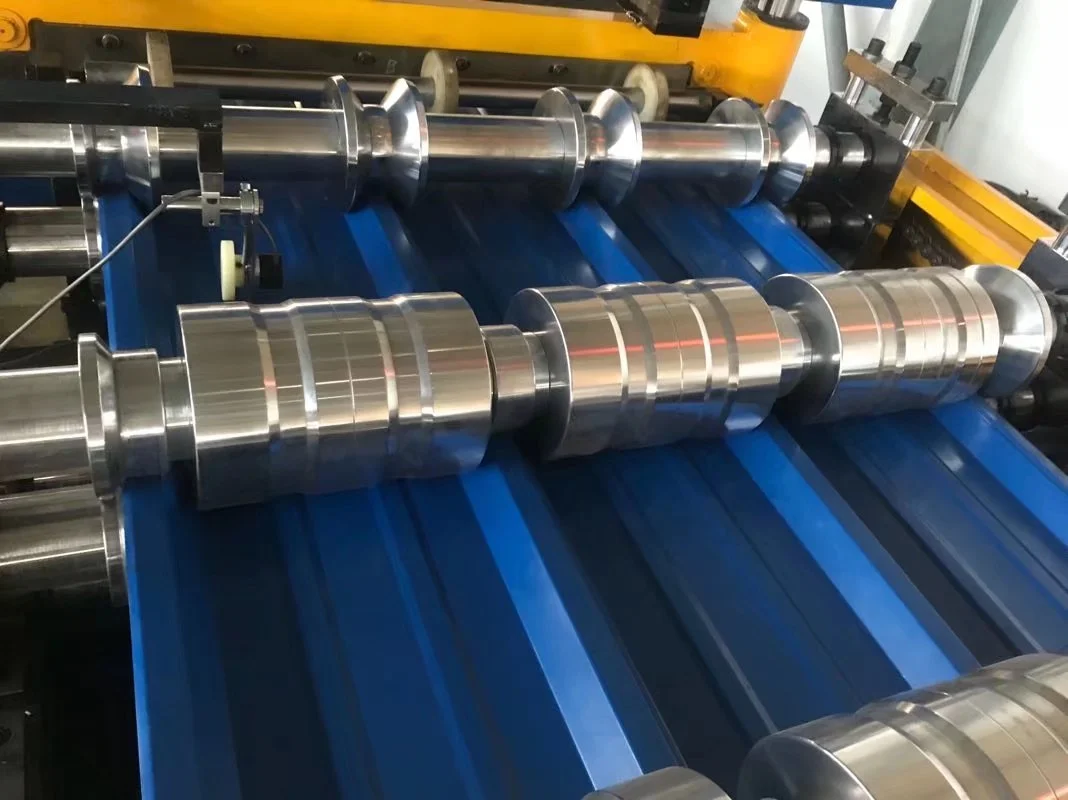
       Unlike general-purpose bending machines, these systems utilize a series of precision-engineered rollers that gradually shape the metal. This process ensures that the structural integrity of the steel is maintained without introducing stress fractures, which is critical for silos that must remain weatherproof and airtight for decades in harsh outdoor environments.        

       Modern iterations of this technology integrate PLC control systems and hydraulic cutting mechanisms, allowing manufacturers to produce sheets of varying lengths and thicknesses with millimeter precision. This allows for the creation of customized silo diameters and heights, catering to both small-scale family farms and massive industrial cooperatives.

Core Technical Components for Maximum Durability

The performance of a grain silo making machine depends heavily on the quality of its forming rollers. High-chrome steel rollers, heat-treated for extreme wear resistance, ensure that the corrugated profile remains consistent over millions of cycles, preventing gaps in the silo wall that could lead to leaks.

Precision in the roll forming sequence is what defines the scalability of the end product. By utilizing an advanced grain silo making machine, operators can adjust the pitch and depth of the corrugations, which directly impacts the load-bearing capacity of the resulting silo, allowing for taller structures without the need for excessive external reinforcement.

Furthermore, the integration of automatic decoilers and precision cutting systems minimizes material waste. This efficiency ensures that the cost per sheet is kept low, making high-quality steel storage accessible to emerging markets where budget constraints often lead to the use of inferior, non-durable storage materials.

Global Applications and Strategic Use Cases

The deployment of grain silo making machine technology varies by region based on agricultural needs. In North America and Europe, these machines are used to create massive industrial complexes for long-term strategic reserves, whereas in Southeast Asia and Africa, the focus is on modular, mid-sized silos that allow smallholder farmers to store grain and sell it when market prices are most favorable.        

       In post-disaster relief operations or remote industrial zones, the modular sheets produced by these machines are invaluable. Because the sheets are lightweight and can be assembled with simple tools, storage infrastructure can be erected in record time, preventing the loss of emergency food supplies in unstable environments.

Efficiency Comparison of Grain Silo Production Methods

Long-Term Value and Economic Advantages

The adoption of a high-quality grain silo making machine provides an immediate return on investment through the drastic reduction of material scrap and labor hours. By automating the precision of the corrugated fold, manufacturers eliminate the human error associated with manual bending, resulting in a 100% fit rate during onsite assembly.        

       Beyond the financial metrics, there is a profound social impact. Reliable storage infrastructure grants farmers dignity and economic autonomy; they are no longer forced to sell their entire harvest immediately after reaping at rock-bottom prices. This stability fosters rural development and strengthens the overall resilience of the national food supply chain.

Future Trends in Automated Silo Manufacturing

The future of the grain silo making machine is trending toward Industry 4.0 integration. We are seeing the rise of "Smart Forming" lines where IoT sensors monitor roller wear in real-time, predicting maintenance needs before a part fails, thereby eliminating unplanned downtime in high-volume production environments.        

       Sustainability is also driving innovation. New machines are being designed to handle eco-friendly, high-strength alloys and recycled galvanized steels that offer the same corrosion resistance as virgin materials but with a significantly lower carbon footprint. This aligns the agricultural storage industry with global green energy goals.        

       Furthermore, the integration of AI-driven optimization allows machines to automatically switch profiles for different silo sizes without manual reconfiguration. This flexibility enables a single production line to serve multiple market segments—from miniature feed bins to massive grain elevators—with a few clicks of a screen.

Overcoming Common Manufacturing Challenges

One of the most common challenges in using a grain silo making machine is managing "spring-back," where the metal attempts to return to its flat shape after forming. Expert manufacturers solve this by implementing over-bending techniques and using precision-calculated roller geometries that lock the metal into its final corrugated state.        

       Another hurdle is the wear and tear on rollers due to the abrasive nature of galvanized coatings. The solution lies in the application of advanced surface treatments, such as tungsten carbide coating, which extends the life of the rollers by up to 300%, ensuring that the silo sheets remain perfectly uniform over years of operation.        

       Finally, maintaining tight tolerances across very long sheets can be difficult. Modern machines overcome this by incorporating laser-guided alignment systems and reinforced frames that prevent chassis deflection under heavy loads, ensuring that every sheet produced is a perfect mirror of the technical drawing.

Analysis of Technical Specifications for Grain Silo Production Lines

Machine GradeMaterial ThicknessProduction SpeedDurability Score (1-10)
Entry-Level Auto1.0mm - 1.5mm10-15 m/min6
Standard Industrial1.2mm - 2.5mm15-25 m/min8
Heavy Duty Pro1.5mm - 4.2mm20-35 m/min9
CNC Precision Line0.8mm - 3.0mm30-50 m/min10
Modular Custom1.0mm - 2.0mm12-20 m/min7
High-Speed Export1.2mm - 2.8mm40-60 m/min9

FAQS

What is the ideal material thickness for a grain silo making machine?

The ideal thickness depends on the intended silo height and capacity. Generally, 1.0mm to 2.5mm is standard for most commercial silos. However, for extremely large industrial silos, thicknesses up to 4.2mm may be required to ensure structural stability. A versatile grain silo making machine should ideally handle a range of thicknesses to cater to different client needs.

How long does a typical roll forming machine last?

With proper maintenance and the use of high-chrome, heat-treated rollers, a professional grain silo making machine can operate for 10-15 years. The key to longevity is regular lubrication and the timely replacement of wear parts. Using high-grade steel for the machine frame also prevents deformation over decades of heavy use.

Can these machines produce different corrugated profiles?

Yes, many modern machines are designed with interchangeable roller sets. This allows a single grain silo making machine to produce different corrugation depths or pitches, enabling the manufacturer to switch between small-scale storage bins and large-scale agricultural silos without purchasing entirely new equipment.

Is the assembly of the produced sheets difficult?

Not at all. The primary advantage of sheets produced by a grain silo making machine is their modularity. Because the corrugations are precise, the sheets bolt together seamlessly. This "kit-of-parts" approach allows silos to be assembled onsite by semi-skilled labor, significantly reducing the cost of infrastructure deployment.

How does automation improve the quality of the silo?

Automation via PLC systems ensures that every single sheet is identical. In manual bending, small variances can lead to gaps in the silo wall, which are entry points for moisture and pests. An automated grain silo making machine eliminates these variances, ensuring a perfectly airtight and weather-resistant seal.

What is the most cost-effective way to import these machines?

To optimize costs, it is recommended to purchase a complete production line—including the decoiler, roll former, and cutter—from a single manufacturer. This ensures component compatibility and reduces shipping costs. Working with a supplier who provides installation and training can also prevent costly operational errors during the initial setup.

Conclusion

In summary, the grain silo making machine is far more than just a piece of industrial hardware; it is a critical tool for global food security. By bridging the gap between harvest and consumption through the production of durable, scalable, and affordable storage, this technology empowers farmers and stabilizes economies. The transition from manual fabrication to high-precision automated roll forming has set a new standard for durability and efficiency in agricultural infrastructure.        

       Looking forward, the integration of smart manufacturing and sustainable materials will further refine the production of grain storage. For businesses looking to enter the agricultural infrastructure market or upgrade their current capabilities, investing in a precision-engineered production line is the most viable path toward long-term profitability and social impact. To discover the best solutions for your production needs, visit our website: www.hyrollformingmachine.com

Ethan Bellwether

Ethan Bellwether

Ethan Bellwether is a seasoned Mechanical Engineer at Botou Huayang, with over 15 years of experience in roll forming technology. He specializes in the design and customization of metal roof roll forming machines and highway guardrail roll forming machines. Ethan's deep understanding of material science and manufacturing processes ensures our
Previous Engineering the Future of Steel Silo Roll Forming Infrastructure
Next High Precision Corrugated Tank Forming Machine for Storage