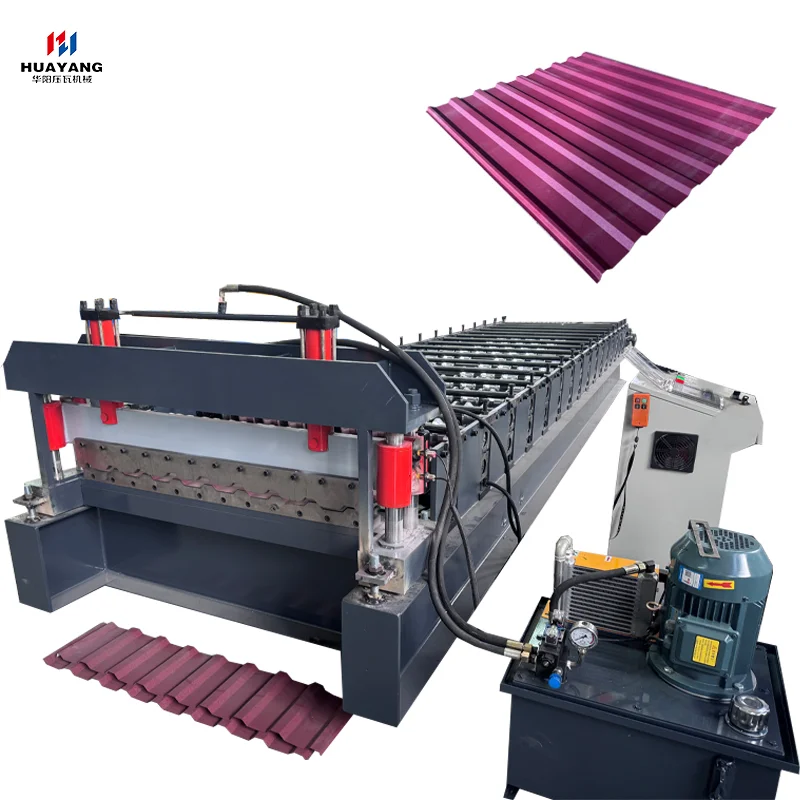
The global construction landscape is witnessing a significant shift toward prefabricated steel components to enhance building speed and structural integrity. Among these, the specialized production of door and window frames has become a critical bottleneck for many manufacturers who struggle with manual fabrication inconsistencies. A high-precision door frame roll forming machine solves these challenges by automating the shaping of galvanized steel into perfect profiles.
Implementing advanced roll forming technology allows for the mass production of frames with thicknesses typically ranging from 0.65mm to 1.0mm, ensuring that every piece meets rigorous architectural standards. This transition from traditional bending to continuous roll forming not only reduces material waste but also significantly lowers labor costs, making it an essential investment for modern steel door and window factories.
By integrating PLC controls and CNC-machined rollers, a door frame roll forming machine provides the dimensional accuracy required for seamless installation in residential, commercial, and industrial projects. Understanding the technical nuances of these machines is the first step toward achieving operational excellence in the metal forming industry.

Precision Engineering for Steel Door Frames
Precision engineering is the heartbeat of any door frame roll forming machine. To ensure that door frames provide structural integrity and security, the forming process must be flawless. By utilizing a series of CNC-machined rollers, the machine gradually shapes cold-rolled, galvanized, or pre-painted steel coils into precise profiles, eliminating the risk of deformation and ensuring that every batch is identical.
The stability of the machine frame is equally critical. Heavy-duty reinforced frames and vibration-free operation guarantee that the alignment of forming stations remains constant even during high-speed production. This level of precision is what allows manufacturers to meet the highest standards of strength and quality required for industrial-grade door systems.
Core Components of the Roll Forming Process
A complete production line for steel frames consists of several integrated modules that work in harmony. It begins with the uncoiler and leveler, which ensure the raw galvanized steel strip is flat and tension-free before entering the main forming section. This prevents warping and ensures that the final profile is straight and true.
The heart of the system is the main roll forming unit, where a series of precision rollers shape the metal. Following the forming process, the cutting part—which can be a hydraulic or flying cut-off system—ensures the frames are cut to exact lengths without stopping the line. This is complemented by a runout table for easy collection of the finished products.
Controlling these complex movements is the industrial PLC control box and the hydraulic station. The PLC guarantees that the entire sequence, from feeding to cutting, is automated and synchronized. This automation minimizes human error and allows for a level of precision that is impossible to achieve with manual fabrication.
High-Efficiency Production Solutions
Efficiency in manufacturing is achieved by reducing secondary processing. A modern door frame roll forming machine integrates punching and notching systems directly into the workflow. This allows for the creation of accurate cutouts for hinges, locks, and reinforcement brackets while the steel is still moving through the line.
The use of servo-driven feeding ensures that material positioning is accurate to the millimeter. By combining coil feeding, leveling, roll forming, and stacking into one seamless process, manufacturers can drastically reduce labor costs and production time, allowing them to scale their operations rapidly to meet market demand.
Furthermore, the ability to maintain high speeds without sacrificing quality is a hallmark of a professional door frame roll forming machine. Advanced drive systems and evenly distributed pressure across forming stations prevent surface scratches and material deformation, ensuring a premium finish for every door structure produced.
Operational Flexibility and Customization
Architectural requirements vary wildly between residential and industrial projects. Therefore, a one-size-fits-all approach does not work. Modern machinery is designed for customization, allowing clients to provide specific profile drawings or samples to create a tailored door frame roll forming machine that meets their exact needs.
This flexibility is powered by adjustable forming stations and programmable PLC systems. Operators can store multiple profile "recipes" in the system and switch between different frame types—such as C, U, or L profiles—with minimal downtime. This agility allows manufacturers to handle custom orders and varied architectural designs without investing in multiple separate machines.
Production Performance of Door Frame Roll Forming Machine Variants
Global Applications in Modern Architecture
The application of the door frame roll forming machine extends across various global sectors. In urban residential developments, these machines produce the lightweight yet durable frames necessary for high-rise apartments. In commercial zones, they create the reinforced structural channels required for secure office partitions and retail storefronts.
Industrial sectors benefit from the ability to mass-produce oversized, heavy-duty frames that can withstand harsh environments. Whether it is for a warehouse in North America or a manufacturing plant in Southeast Asia, the consistency provided by cold roll forming ensures that installation is fast and building safety is never compromised.
Long-Term Value and Reliability
Investing in a professional-grade door frame roll forming machine is a decision based on long-term value. By utilizing hardened rollers and premium-grade steel frames, these machines are built to withstand years of continuous industrial operation. This durability translates to lower maintenance costs and a longer equipment lifecycle.
Beyond the hardware, the value lies in the reliability of the output. Consistent profiles mean fewer rejected parts and less material waste, directly improving the bottom line. The trust built between a manufacturer and their clients depends on the predictability of their product quality, which is only possible with precision machinery.
Comprehensive support—including installation guidance, operator training, and remote troubleshooting—ensures that the machine operates at peak performance from day one. This holistic approach to reliability empowers manufacturers to focus on growth rather than equipment failure.
Future Trends in Cold Roll Forming
The future of the door frame roll forming machine is moving toward "Industry 4.0" integration. We are seeing a shift toward smarter PLC systems that can offer real-time diagnostics, predictive maintenance, and IoT connectivity. This allows factory managers to monitor production throughput and machine health from any location.
Sustainability is another driving force. New materials, such as high-strength low-alloy steels, are being integrated into the process to reduce the total amount of metal required without sacrificing strength. Additionally, energy-efficient drive systems are reducing the carbon footprint of the manufacturing process.
As modular and prefabricated construction becomes the global norm, the demand for highly adaptable forming solutions will grow. The ability to rapidly prototype and produce complex architectural profiles will define the next generation of roll forming technology.
Comparison of Roll Forming Technical Specifications
| Machine Feature | Standard Version | Automation Pro | Custom Industrial |
|
|---|
| Material Thickness | 0.65mm - 1.0mm | 0.65mm - 1.2mm | Up to 2.0mm | Tailored |
| Control System | Basic PLC | Advanced Touch PLC | Custom Integrated PLC | IoT Enabled |
| Cutting Method | Hydraulic Stop | Flying Cut-off | Precision Servo Cut | Customized |
| Production Speed | Medium | High | Very High | Optimized |
| Roller Material | Hardened Steel | Cr12 Chrome Steel | Tungsten Carbide Coated | Premium Alloy |
| Accuracy Level | ±0.5mm | ±0.2mm | ±0.1mm | Ultra-Precision |
FAQS
Normally, the thickness of the steel used for door or window frames ranges from 0.65mm to 1.0mm. However, our machines can be customized to handle different thickness requirements depending on the structural needs of the project, ensuring that the final product is both durable and lightweight.
Yes, we specialize in customizable cold roll forming solutions. Customers can send us their specific profile drawings or physical samples, and our engineering team will design the roller stations and PLC settings to produce that exact shape, ensuring a perfect fit for your architectural requirements.
A complete line typically consists of an uncoiler, a leveler to flatten the steel, the main roll forming machine, a cutting unit (hydraulic or flying), a runout table for finished parts, a PLC control box for automation, and a hydraulic station to power the cutting and punching systems.
Automation via PLC control removes human error from the shaping and cutting process. It ensures that every frame is cut to the exact same length and that the profile dimensions are consistent throughout the entire production run, which is critical for fast and easy installation on-site.
Our machines are engineered to handle various types of steel coils, including cold-rolled steel, galvanized steel for corrosion resistance, and pre-painted steel for aesthetic finishes. This versatility allows manufacturers to serve different market segments from industrial to residential.
We use hardened rollers to minimize wear. To maintain precision, regular lubrication of the bearing systems and periodic inspection of the roller alignment are recommended. Our comprehensive service includes operator training to help your team perform these maintenance tasks efficiently.
Conclusion
The adoption of a door frame roll forming machine represents a strategic leap in manufacturing efficiency and product quality. By integrating precision engineering, automated PLC controls, and customizable roller designs, manufacturers can transition from slow, manual processes to a high-throughput system that ensures dimensional accuracy and structural reliability. From the initial uncoiling to the final cut, these machines eliminate waste and optimize labor, providing a foundation for sustainable growth in the competitive construction material market.
Looking forward, the integration of smarter automation and eco-friendly materials will continue to redefine the standards of the metal forming industry. For companies seeking to enhance their production capacity and deliver superior architectural components, investing in high-precision roll forming technology is no longer optional—it is a necessity for survival and leadership in the global market. Visit our website for more professional solutions: www.hyrollformingmachine.com