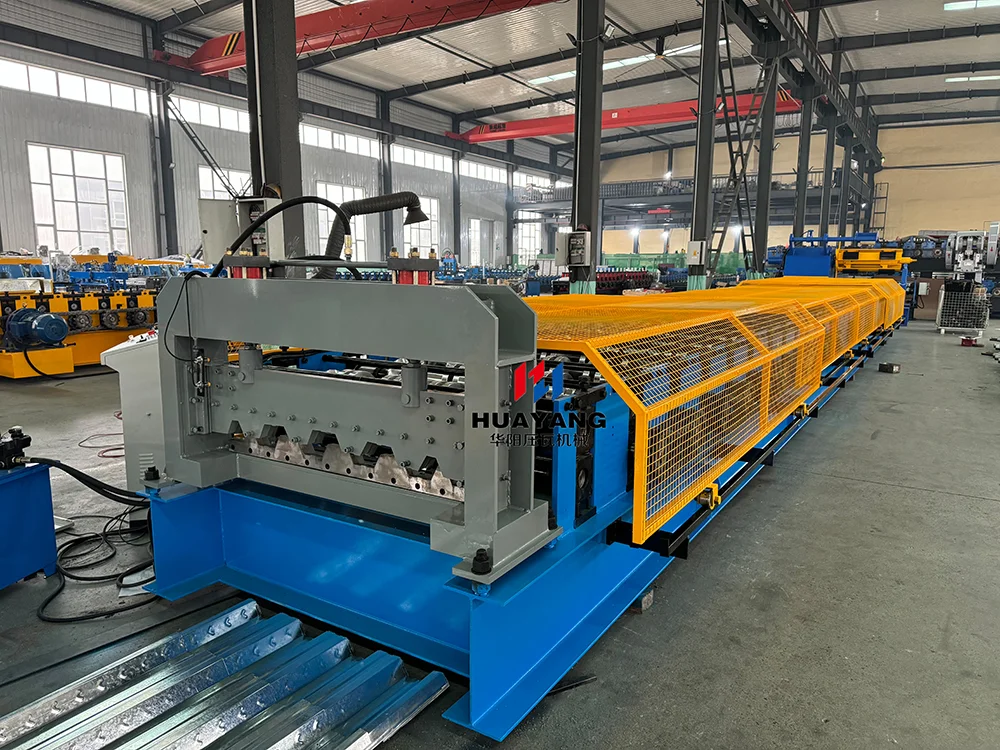
The global demand for sustainable water management has catalyzed a significant shift toward high-efficiency infrastructure, placing the water tank forming machine at the center of industrial innovation. As urban centers expand and agricultural needs intensify, the ability to rapidly produce durable, leak-proof, and scalable steel water storage solutions has become a critical priority for governments and private enterprises alike.
Modern engineering challenges, such as water scarcity and the need for rapid deployment in remote areas, require machinery that can transform raw galvanized steel into precision-engineered panels. By utilizing a water tank forming machine, manufacturers can ensure that every sheet meets strict dimensional tolerances, which is essential for the structural integrity of large-scale silos and reservoirs.
Understanding the technical nuances of these machines—from roll forming precision to material versatility—allows stakeholders to optimize production costs while enhancing the lifespan of the end product. This guide explores the global context, technical components, and future trajectories of the technology that makes modern water security possible.

Global Relevance of Water Tank Forming Machine
Across the globe, access to clean water is recognized as a fundamental human right, yet millions still lack reliable storage infrastructure. The water tank forming machine addresses this gap by enabling the mass production of modular steel tanks that can be shipped in flat packs and assembled on-site, drastically reducing logistics costs.
Data from international development agencies highlight that in regions prone to drought or disaster, the speed of deploying water storage can be the difference between stability and crisis. High-efficiency roll forming ensures that these tanks are not only produced quickly but are engineered to withstand extreme environmental pressures, ensuring long-term water security for marginalized communities.
Defining the Water Tank Forming Machine
In technical terms, a water tank forming machine is a specialized cold-roll forming system designed to bend continuous strips of galvanized steel into specific profiles used for the walls and roofs of water storage tanks. Unlike traditional welding or casting, this process uses a series of rollers to gradually shape the metal, maintaining the material's structural integrity while achieving high precision.
This machinery is inextricably linked to modern humanitarian and industrial needs. Whether it is producing panels for a municipal reservoir or smaller units for livestock farming, the machine provides a standardized method of creation. This standardization is key to "modular" construction, where parts are interchangeable and easily replaced.
By integrating advanced CAD/CAM designs, these machines can handle sheet thicknesses from 1.0mm up to 3.0mm, adapting to the specific pressure requirements of the tank's intended volume. This flexibility makes it an essential tool for manufacturers serving both the agricultural and industrial sectors.
Core Components for Maximum Durability
The operational excellence of a water tank forming machine depends heavily on its precision rollers. These components are typically crafted from high-grade alloy steel and heat-treated to prevent wear, ensuring that the formed profiles remain consistent even after thousands of cycles.
Another critical aspect is the automated control system. Modern water tank forming machine units utilize PLC (Programmable Logic Controller) systems to synchronize feeding, forming, and cutting, which minimizes human error and reduces material waste to near-zero levels.
Finally, the cutting system—often a hydraulic shear—must be perfectly aligned with the forming rollers. This ensures that the edges of the water tank sheets are clean and square, which is vital for the watertight sealing process during the final assembly of the tank.
Global Applications and Use Cases
The versatility of the water tank forming machine allows it to serve a diverse array of global sectors. In agricultural zones, it is used to create large-scale livestock water troughs and grain silos, where the ability to resist corrosion is paramount. In urban municipal projects, these machines produce the heavy-duty panels required for city-wide water reserves.
Beyond permanent installations, these machines are vital for disaster relief. For instance, in post-earthquake or flood-prone regions, modular tanks produced by roll forming technology can be deployed in days rather than months, providing immediate access to potable water and preventing the spread of waterborne diseases.
Efficiency Comparison of Water Tank Production Methods
Long-Term Value and Sustainability
Investing in a high-quality water tank forming machine offers significant long-term economic advantages. By reducing the labor required for assembly and minimizing material waste through precision cutting, manufacturers can lower their cost per unit while increasing their total output capacity.
From a sustainability perspective, the use of galvanized steel processed through roll forming is highly eco-friendly. Steel is 100% recyclable, and the precision of the water tank forming machine ensures that the resulting tanks have a longer lifespan, reducing the frequency of replacements and the associated carbon footprint of manufacturing and transport.
Future Trends in Roll Forming Technology
The future of the water tank forming machine is leaning heavily toward "Industry 4.0" integration. We are seeing the rise of IoT-enabled machinery that can predict wear and tear on rollers before a failure occurs, utilizing predictive maintenance to eliminate unplanned downtime.
Furthermore, there is a growing trend toward the use of advanced coatings and hybrid materials. Future machines will likely be adapted to handle new alloys that offer even higher corrosion resistance, extending the life of water tanks in saltwater or highly acidic environments.
Automation is also evolving from simple PLC controls to AI-driven optimization. These systems can automatically adjust the forming pressure based on the specific batch of steel being used, ensuring that the water tank forming machine maintains absolute precision regardless of slight variations in raw material quality.
Challenges and Expert Solutions
One of the most common challenges in using a water tank forming machine is "spring-back," where the metal slightly returns to its original shape after forming. This can lead to gaps in the tank panels, compromising the seal. Expert solution involves utilizing precision-calculated over-bending techniques and high-precision roller calibration to counteract this natural material tendency.
Another limitation is the setup time required when switching between different profile sizes. To solve this, modular tooling systems are being implemented. These allow operators to swap roller sets quickly, transforming a standard water tank forming machine into a multi-profile production line with minimal downtime.
Lastly, maintaining surface quality is a constant struggle in high-volume production. The implementation of automatic lubrication and precision feeding systems ensures that the steel is not scratched during the forming process, which is critical since any surface scratch can become a point of corrosion over time.
Comparative Analysis of Water Tank Forming Machine Configurations
| Machine Model | Material Capacity | Precision Level | Operational Speed |
|---|
| Standard Z-Series | 1.0mm - 2.0mm | High (±0.5mm) | Medium |
| Heavy Duty Pro | 2.0mm - 3.0mm | Very High (±0.3mm) | Medium |
| High-Speed Auto | 1.0mm - 2.5mm | High (±0.6mm) | Very High |
| Custom Modular | Variable | Ultra High (±0.2mm) | Low-Medium |
| Eco-Series | 1.0mm - 1.5mm | Medium (±0.8mm) | High |
| Industrial Max | 2.5mm - 4.0mm | Very High (±0.4mm) | Medium |
FAQS
The most common and suitable material is galvanized steel due to its excellent balance of strength and corrosion resistance. Depending on the specific needs, stainless steel or pre-painted galvanized steel can also be used. Most machines are designed for thicknesses between 1.0mm and 3.0mm to ensure structural stability while maintaining the ability to be formed without cracking.
Roll forming with a water tank forming machine is significantly faster and more consistent than manual welding. It allows for modular production, meaning panels can be made in a factory and assembled on-site. This reduces the need for skilled welders at the installation site and ensures that every panel is dimensionally identical, which is nearly impossible to achieve with traditional manual methods.
Yes, most professional manufacturers offer customizable roll forming solutions. By providing a specific CAD drawing or profile requirement, the rollers can be engineered to create unique shapes, widths, and thicknesses. This is particularly useful for specialized industrial tanks or customized architectural water storage projects that do not fit standard dimensions.
When produced by a precision water tank forming machine and properly coated, galvanized steel tanks can last between 20 to 50 years. The lifespan depends on the quality of the steel, the environmental conditions (e.g., salinity of the air), and the maintenance of the exterior coating. Precision forming ensures no weak points or gaps, which prevents premature corrosion.
Watertightness is achieved through the high precision of the water tank forming machine, which creates perfectly fitting interlocking edges. These edges are then sealed using industrial-grade sealants or gaskets during assembly. Because the panels are uniform, the seals are consistent across the entire structure, preventing leaks that often occur in hand-fabricated tanks.
Modern roll forming machines are designed for energy efficiency. By using high-torque, low-RPM motors and optimized gear systems, they minimize power consumption during the forming process. Additionally, the reduction in material waste (scrap metal) contributes significantly to the overall environmental and economic efficiency of the production facility.
Conclusion
The water tank forming machine represents a pivotal intersection of mechanical precision and humanitarian necessity. By transforming raw steel into high-performance modular components, this technology enables the rapid deployment of essential water storage infrastructure, reduces production costs, and ensures a level of structural durability that manual methods simply cannot match. From its core components—precision rollers and PLC controls—to its global application in disaster relief and agriculture, the value of this machinery lies in its ability to provide scalable, sustainable solutions for water security.
Looking forward, the integration of AI and IoT will further refine the precision and efficiency of these machines, making them even more accessible to manufacturers worldwide. For those seeking to enter the water storage market or optimize their current production, investing in high-precision roll forming technology is not just a business decision, but a commitment to quality and sustainability. Explore the latest in industrial forming solutions by visiting our website: www.hyrollformingmachine.com.