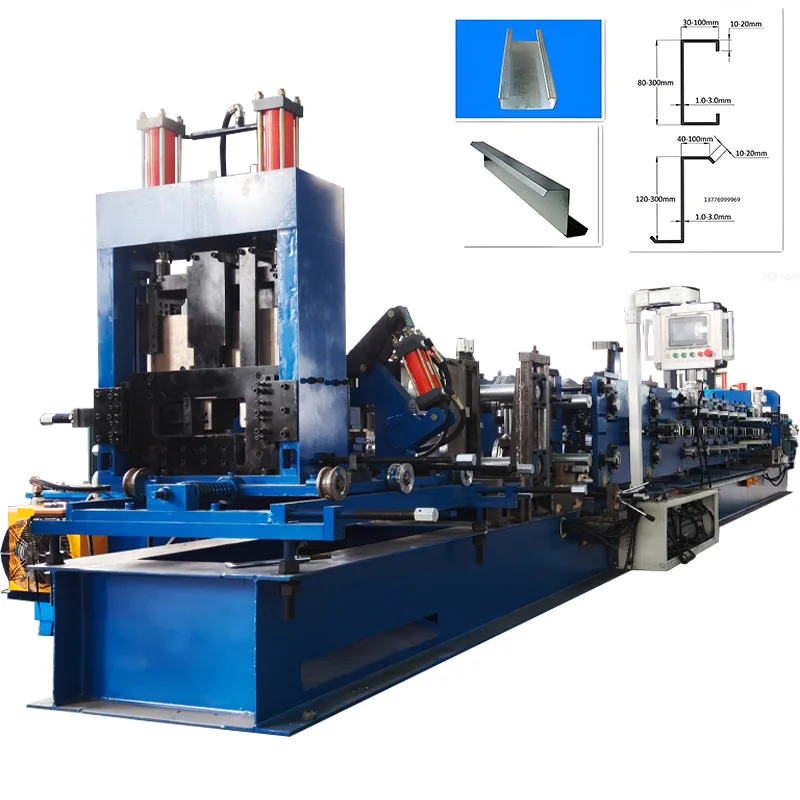
The global construction landscape is undergoing a significant shift toward industrialized building systems, where precision and speed are paramount. Central to this evolution is the production of high-strength flooring components that can withstand immense loads while remaining cost-effective. The adoption of advanced roll forming technology has revolutionized how we create structural decking, ensuring that modern warehouses and commercial hubs are built on a foundation of absolute stability.
In the competitive world of metal fabrication, the ability to produce consistent, high-tolerance panels is what separates industry leaders from the rest. Manufacturers are increasingly seeking equipment that minimizes material waste and maximizes output without sacrificing the structural integrity of the galvanized coating. This demand has led to the development of sophisticated machinery capable of handling diverse steel thicknesses and complex ribbed profiles.
For those looking to enter or expand in the structural flooring market, investing in a high-quality floor tile making machine is the most critical step toward operational success. By integrating CNC precision with automated workflows, these systems allow for the rapid creation of galvanized metal floor deck panels that meet rigorous international safety and building standards.

Precision Roll Forming for Metal Decking
Precision is the bedrock of structural integrity in galvanized metal floor decking. By utilizing CNC-machined rollers, our equipment ensures that steel coils are shaped gradually, which prevents the deformation of the material and protects the vital galvanized coating from scratches. This meticulous approach ensures that every panel produced has consistent dimensions and accurate profiles, which is essential for seamless installation on construction sites.
Furthermore, the adaptability of these systems allows for the production of various designs, from standard flat decks to complex ribbed profiles that increase load-bearing capacity. By optimizing pressure distribution across the forming stations, manufacturers can achieve superior surface quality and repeatable accuracy, ensuring that the final product meets the most stringent engineering specifications.
High-Efficiency Production Line Integration
Modern construction demands speed and cost-effectiveness, making fully integrated production lines indispensable. A comprehensive setup combines coil feeding, leveling, roll forming, punching, and cutting into one streamlined workflow. This integration eliminates the need for secondary manual operations, significantly reducing labor costs and accelerating the overall production cycle.
Servo-controlled feeding systems ensure that material positioning is precise to the millimeter, while integrated punching and notching units create necessary cutouts for drainage or assembly brackets during the forming process. This synchronization ensures that the panels are "ready-to-install" the moment they leave the machine, providing a massive advantage in project timelines.
To maximize throughput, hydraulic or flying cut-off systems are employed, allowing the production line to operate continuously without stopping for each cut. Coupled with automated stacking systems, the entire process becomes a seamless transition from raw steel coil to organized, finished pallets of high-quality floor decking.
Customization in Industrial Flooring Machinery
Every construction project has unique requirements, which is why a customizable floor tile making machine is essential for manufacturers. Customization starts with the specific needs of the client, including the desired panel width, steel thickness, and the specific height of the ribs to meet various load-bearing capacities.
The engineering process involves creating modular forming units and adjustable roller stations that allow operators to switch between different profiles quickly. This flexibility means a single production line can serve multiple project types, from small-scale residential flooring to massive industrial warehouse decks, without requiring extensive downtime for reconfiguration.
Beyond the profile itself, customization extends to auxiliary equipment. Embossing devices for slip resistance or specialized notching attachments for complex architectural joins can be integrated into the system. This bespoke approach ensures that the resulting galvanized metal floor deck panels are perfectly tailored to the end-user's structural and aesthetic requirements.
Core Performance Metrics of Decking Systems
Evaluating the performance of a production system requires a look at several critical KPIs: production speed, material yield, dimensional accuracy, and operational stability. High-performance machinery minimizes scrap metal by optimizing the cutting process and ensuring that the roll forming happens without material stretching or thinning.
The integration of PLC-controlled touchscreens allows for real-time monitoring of these metrics, enabling operators to make minute adjustments to rib height or panel length on the fly. This digital oversight ensures that every batch maintains the same high standard of quality, regardless of the production volume.
Comparative Performance of Floor Decking Production Methods
Global Applications of Metal Floor Panels
Galvanized metal floor decking is utilized worldwide across diverse sectors. In industrial zones, these panels serve as the primary base for heavy-duty warehouses and factories, where high load-bearing capacity and fire resistance are mandatory. Their ability to act as permanent formwork for concrete slabs makes them a favorite for rapid urban development in Asia and North America.
In commercial applications, such as multi-story office buildings and shopping malls, these panels provide a lightweight yet strong solution that reduces the overall dead load of the structure. Additionally, in specialized sectors like modular housing or remote industrial outposts, the ease of transport and quick installation of roll-formed floor panels ensures that infrastructure can be deployed in challenging environments with minimal delay.
Long-Term Value and Sustainability
The shift toward using a floor tile making machine instead of traditional casting or manual welding offers significant long-term economic value. By reducing material waste through precision cold roll forming, companies can lower their raw material costs and minimize their environmental footprint.
Moreover, the use of galvanized steel ensures that the floor panels are corrosion-resistant and durable, extending the lifespan of the building. This longevity reduces the need for frequent repairs and replacements, providing property owners with a sustainable, low-maintenance flooring solution that maintains its structural integrity for decades.
From a social perspective, the increased safety provided by precision-engineered decking—which adheres to strict load-bearing tolerances—protects workers and occupants. The trust established through consistent quality and adherence to ISO standards allows manufacturers to scale their businesses and enter high-stakes government and infrastructure contracts.
Future Innovations in Roll Forming Technology
The future of metal decking production lies in the convergence of Industry 4.0 and materials science. We are seeing the integration of AI-driven predictive maintenance, where sensors within the roll forming machine can detect roller wear before it affects product quality, reducing unplanned downtime and ensuring a continuous flow of production.
Digital transformation is also bringing advanced simulation software into the design phase. Engineers can now virtually model a new profile and simulate the roll forming process to identify potential material stresses or defects before a single roller is machined. This drastically reduces the time-to-market for new, innovative floor deck designs.
Sustainability will remain a driving force, with a move toward higher-grade recycled steel and energy-efficient drive systems. The goal is to create a fully closed-loop production system where energy consumption is minimized and every scrap of steel is recovered, ensuring that the construction industry moves toward a greener, more efficient future.
Analysis of Technological Advancements in Decking Production
| Innovation Feature | Impact on Production | Efficiency Gain | Sustainability Score |
|---|
| AI Predictive Maintenance | Reduced unplanned downtime | High | 7/10 |
| Servo-Feeding Systems | Millimeter-level precision | Very High | 8/10 |
| Virtual Profile Simulation | Faster prototyping | Medium | 9/10 |
| Energy-Efficient Drives | Lower electricity costs | Medium | 10/10 |
| Automated Stacking | Lower manual labor | High | 6/10 |
| Recycled Steel Processing | Lower raw material cost | Medium | 10/10 |
FAQS
The main advantage is the ability to produce high-precision, consistent profiles at a massive scale with minimal material waste. Unlike manual fabrication, roll forming ensures that every panel has identical load-bearing characteristics and a flawless galvanized finish, which is critical for structural safety and speed of installation on construction sites.
Yes, provided the machine is designed with modular forming units and adjustable roller stations. Customizable systems allow manufacturers to switch between standard flat decks and various ribbed profiles, enabling them to meet diverse project specifications—from residential to heavy industrial—without needing multiple separate machines.
Automation replaces human error with CNC precision. PLC-controlled systems manage the pressure and speed of the rollers, ensuring that the galvanized coating is not scratched or deformed. Furthermore, integrated punching and cutting units ensure that every hole and edge is placed with absolute accuracy, eliminating the need for manual corrections.
Regular maintenance focuses on the lubrication of moving parts, the inspection of roller wear, and the calibration of the PLC and servo systems. Using hardened rollers significantly extends the equipment's life, but periodic checks are necessary to ensure that tolerances remain within the specified range for structural safety.
Yes, cold roll forming is significantly more sustainable because it optimizes material usage, resulting in far less scrap metal compared to stamping or cutting from sheets. Additionally, the high durability of the resulting galvanized panels means they last longer in the field, reducing the frequency of replacement and the associated environmental impact.
You should evaluate your required daily output, the variety of profiles you need to produce, and your budget for labor. For high-volume needs, a fully integrated line with flying cut-off and automated stacking is best. For specialized, lower-volume projects, a modular and customizable machine offers the flexibility needed to serve niche markets profitably.
Conclusion
The production of galvanized metal floor decking has evolved from a manual craft into a high-precision science. By integrating CNC technology, modular customization, and automated workflows, manufacturers can now deliver structural panels that offer an optimal balance of strength, durability, and cost-efficiency. The synergy between precision roll forming and smart automation not only ensures the safety of modern buildings but also drives the economic viability of the construction industry.
Looking forward, the industry will continue to be shaped by digital transformation and a commitment to sustainability. Investing in advanced machinery today is not just about increasing output—it is about future-proofing a business against changing regulations and increasing market demands for green building materials. We invite you to explore our high-performance solutions and elevate your production capabilities. Visit our website: www.hyrollformingmachine.com